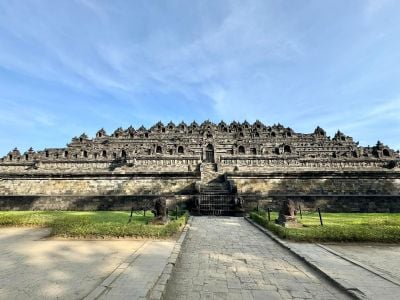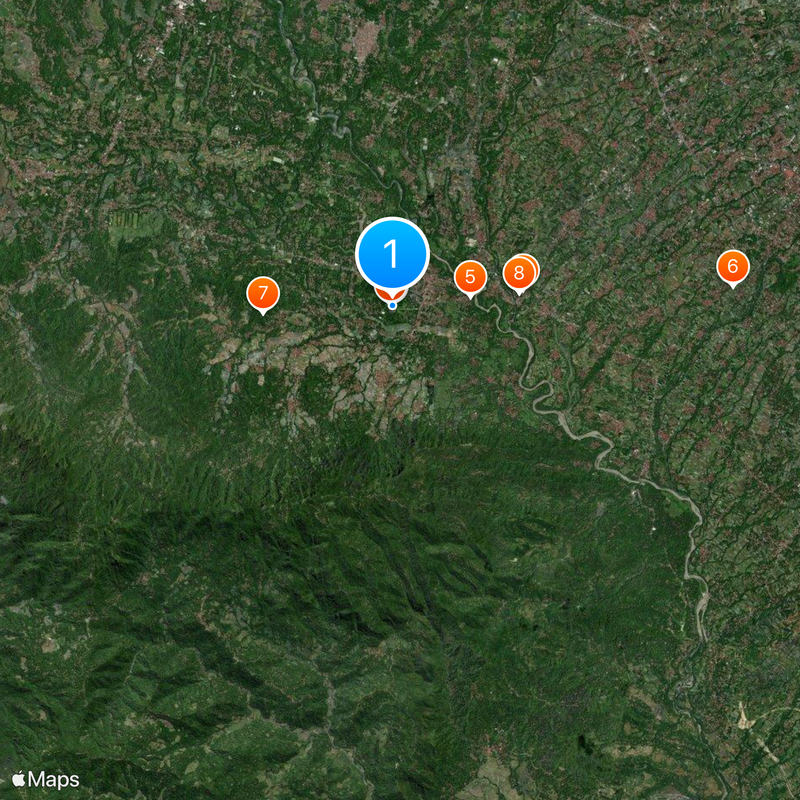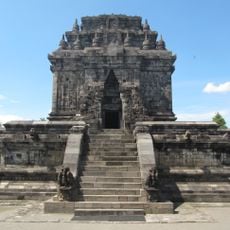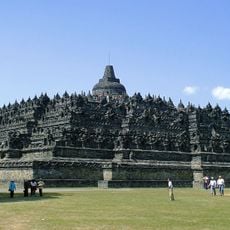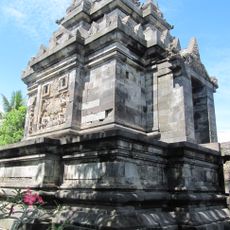
Borobudur Temple, Buddhist temple in Central Java, Indonesia.
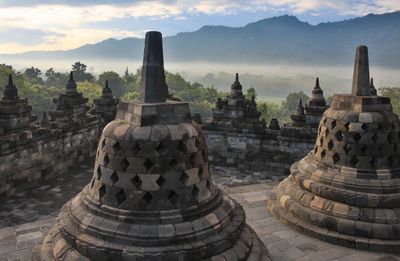
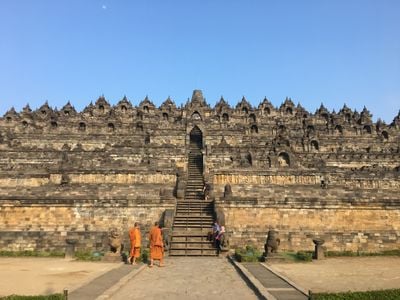
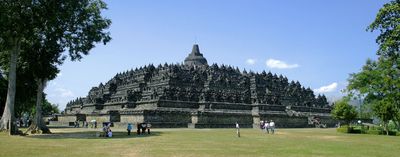
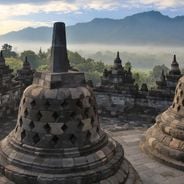
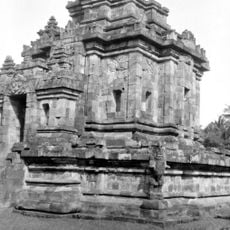
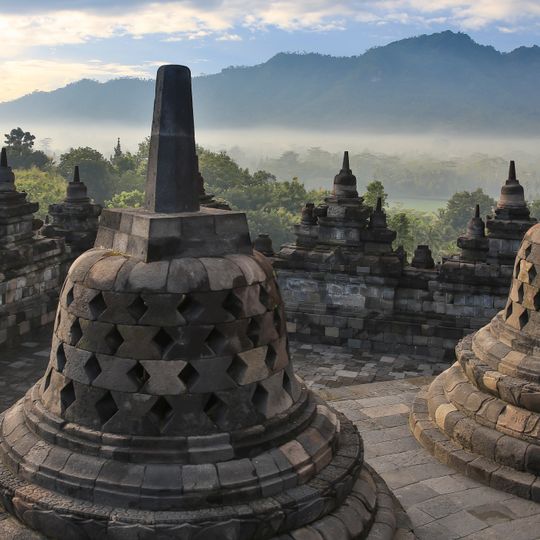
Borobudur is a Buddhist temple monument in Central Java built from gray volcanic stone across nine ascending levels with carved relief panels and hundreds of Buddha statues throughout. The lower sections form square terraces with continuous galleries, while the upper levels display circular platforms crowned by latticed stupas that partially reveal seated Buddha figures inside.
The Sailendra Dynasty built this temple between 780 and 840 as Buddhism spread through Java, before it later disappeared under volcanic ash and jungle growth. Following rediscovery in the early 19th century, Dutch and Indonesian teams carried out extensive restoration that began in the early 20th century and continued into the 1980s.
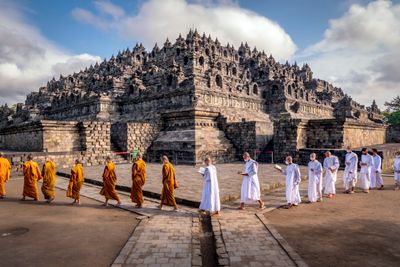
Visitors today witness Buddhist ceremonies during Vesak when pilgrims walk the terraces in procession and light candles at the stupas. Many travelers observe local worshippers meditating quietly or placing flowers at the niches, while the clockwise walking practice still follows the original ritual pattern through each ascending level.
Access involves climbing steep stone staircases through the different terraces, with each level allowing a complete clockwise walk along the galleries. Early morning visits provide cooler temperatures and smaller crowds, while regular bus connections link the site to Yogyakarta located roughly forty kilometers away.
The upper stupas contain partially hidden Buddha figures behind perforated stone walls visible only through diamond-shaped openings, symbolically representing the transition from material to formless realms. A central stupa at the summit remains completely sealed and may never have been intended to open, prompting speculation about its contents to this day.
The community of curious travelers
AroundUs brings together thousands of curated places, local tips, and hidden gems, enriched daily by 60,000 contributors worldwide.