Ngawen, Buddhist temple in Magelang, Indonesia
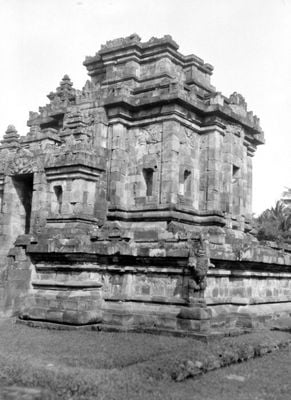
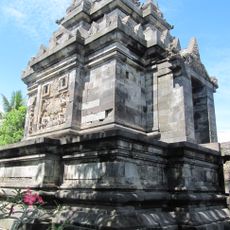
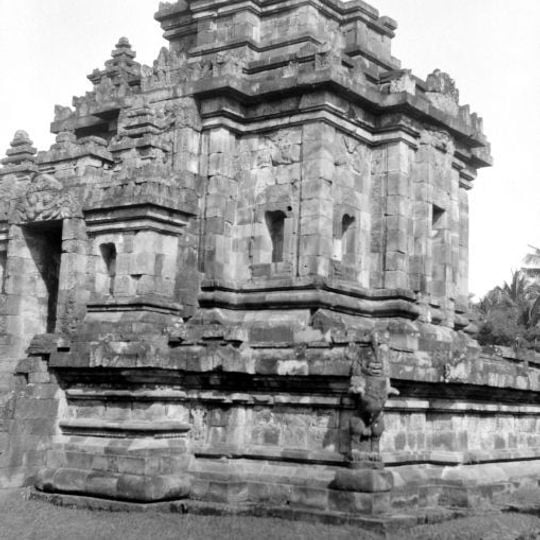
Ngawen is a temple complex in Magelang consisting of five structures arranged in a line from north to south. The second building in this sequence is the most complete, preserving its original form and carved details.
The temple complex was built during the Syailendra dynasty in the 8th century, as documented in the Karang Tengah inscription from 824. This period marked an era of major religious construction across the region.
The name Ngawen comes from Old Javanese awi, meaning bamboo; Soekmono linked it to Venuvana, the "bamboo forest" shrine named in the 824 Karangtengah inscription. On the base walls, kinnara and kinnari, half-human half-bird heavenly beings, flank a Kalpataru tree of life. The niches of the outer walls are now empty, but their kala-head frames remain.
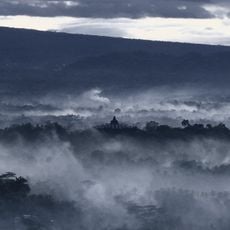
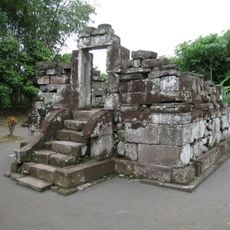
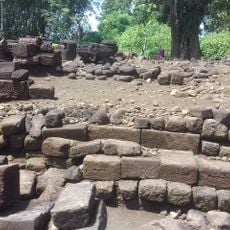
The compound lies in Ngawen village, Muntilan sub-district, about 6 km east of Mendut temple and 5 km south of Muntilan town centre, set between a village and rice paddies. Only temple No. 2, the northern main temple, stands reconstructed; the other four are ruins, and temple No. 1 is reduced to its foundation. The temples face east, with stairs on the east side.
Only temples 2 and 4 carry four rampant lion statues at their corners; these lions also served as waterspouts, channeling rainwater out through their mouths. The roof of the reconstructed temple is crowned with ratna pinnacles rather than a stupa, a Hindu element that has led experts to suggest the shrine was first built as a Hindu temple and later converted to Buddhism.
The community of curious travelers
AroundUs brings together thousands of curated places, local tips, and hidden gems, enriched daily by 93,185 contributors worldwide.