Pawon Temple, Buddhist temple in Wanurejo, Indonesia
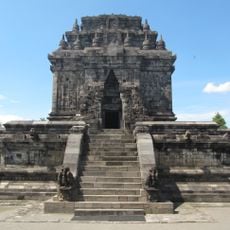
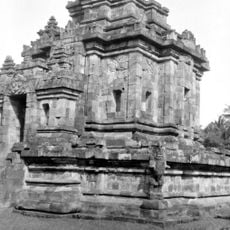
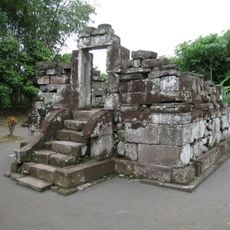
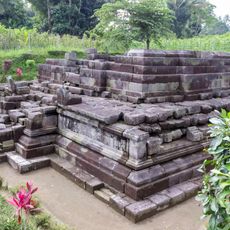
Pawon Temple is a Buddhist shrine of andesite stone standing on a 1.5 m base, its square plan about 10 m per side and its height 13.3 m. The single chamber, 2.65 m by 2.64 m, opens west through a doorway framed by makaras and a kala head. The outer walls carry reliefs of Kuwera, kinara-kinari flanking a kalpataru tree, and small ventilation windows; the tiered roof is crowned by stupas.
Built during the Sailendra dynasty in the 8th–9th centuries, Pawon is slightly older than Borobudur according to carving style. Epigraphist J.G. de Casparis linked its name to the Javanese word awu (ash), suggesting it stored the ashes of King Indra (782–812). It was restored in 1903.
The temple serves as a focal point for Buddhist ceremonies, with devotees gathering here during annual Waisak celebrations to honor their faith. The processions that pass through connect this place to the neighboring temples and highlight its role in the region's spiritual practices.
Pawon stands 1.75 km east of Borobudur and 1.15 km west of Mendut, on the same straight axis; many visitors walk between the three. The temple faces northwest, and its single chamber is entered from the western stairs. The 1903 restoration left the outer walls exposed, so examine the reliefs in daylight.
The walls display fine reliefs showing celestial beings and mythical trees, with certain figures visible only upon close inspection. These hidden details reward visitors who take time to examine the stonework carefully.
The community of curious travelers
AroundUs brings together thousands of curated places, local tips, and hidden gems, enriched daily by 93,195 contributors worldwide.