Pravčická brána

Log in to your account

AroundUs is a community-driven map of interesting places, built by curious explorers like you. It grows with every review, story, and photo you share.
Connect to save your favorite spots, contribute locations, and create personalized routes.
By continuing, you accept our Terms and Conditions and our Privacy Policy
Add to collection
Map
Suggest a change
Share

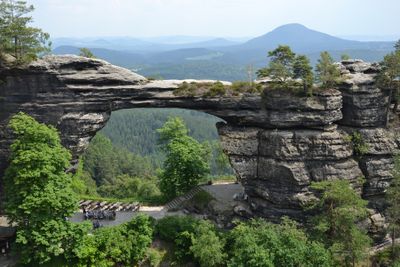
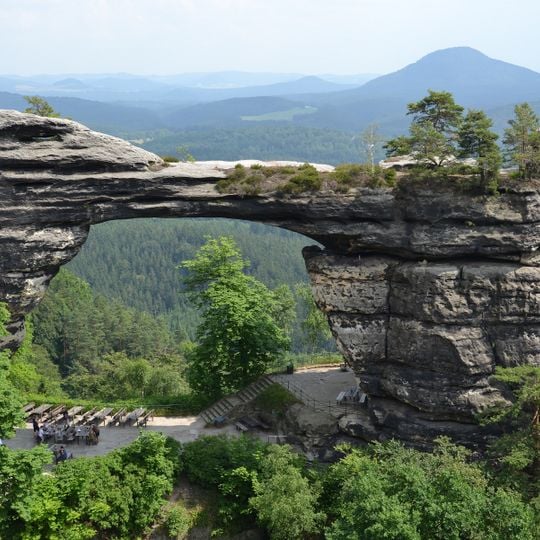
Pravčická brána, Natural sandstone arch in Bohemian Switzerland National Park, Czech Republic

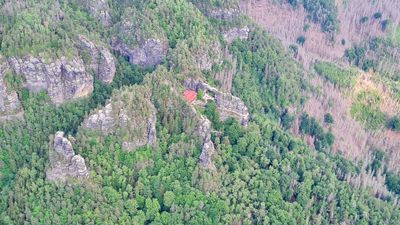
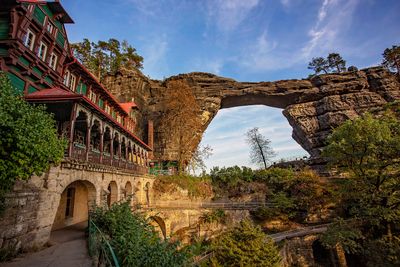
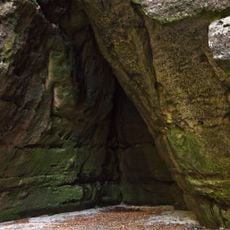
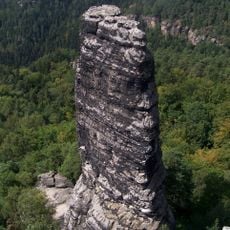
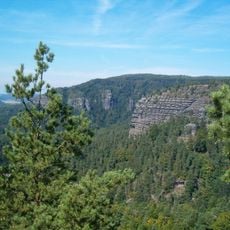
Pravčická brána is a natural sandstone formation that creates an open passage through rock and rises distinctly from the surrounding landscape. The arch sits nestled within forested slopes and forms a striking geological feature in the Bohemian Switzerland area.

The rock formation developed over millions of years as water and wind slowly eroded the sandstone, creating the passage we see today. A nearby castle built in the late 1800s helped draw attention to the area as a landmark of note.

The arch bears a name rooted in the falcons that once nested here, shaping how locals understood this corner of the landscape. Today that same name connects the rock formation to the region's natural identity.

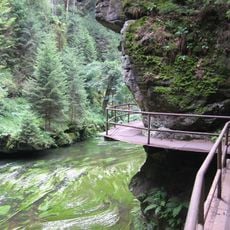
The site can be reached via a marked hiking trail from Hřensko village, and the path is well signposted through the forest. Visitors should wear comfortable shoes and be prepared for muddy or uneven ground, especially after rain.

At its narrowest point the rock is only a few meters thick, showing how finely natural erosion has whittled away the material. This extreme thinness reveals how fragile such formations can be.

Location: Hřensko

Elevation above the sea: 373 m

Accessibility: Wheelchair inaccessible

Website: http://pbrana.cz/en

GPS coordinates: 50.88371,14.28125

Latest update: December 6, 2025 16:01

Natural stone arches and rock holes

Geological forces have carved openings, arches, and caves into rock formations across continents through millions of years of erosion. Water, wind, and weathering have shaped these natural structures from various rock types, creating landmarks that reveal the Earth's ongoing transformation. The formations appear in diverse environments, from coastlines where ocean waves carve passages through limestone cliffs to desert regions where wind erosion creates openings in sandstone walls. This collection spans locations such as Durdle Door along England's Jurassic Coast, where a 200-foot (60-meter) arch rises from layers dating to the Mesozoic era. The Faraglioni Rocks off Capri reach heights of 360 feet (109 meters) and include a natural passage navigable by boat. In landlocked regions, formations like the Eyes of God in Bulgaria's Prohodna Cave display symmetrical ceiling openings where sunlight penetrates the rock. Desert sites such as Las Ventanas in Argentina's Andes showcase wind-carved arches in remote sandstone landscapes. Each location offers direct evidence of erosion processes that continue shaping these geological features, from readily accessible coastal points to isolated areas requiring significant travel to reach.

Notable rock formations worldwide

Geological formations develop over millions of years through natural processes including erosion, weathering, and tectonic activity. These rocks and stone structures take various forms – arches, monoliths, spheres, and pillars – shaped by wind, water, and time. They document Earth's geological history and provide insight into the forces that have sculpted our planet. From the red sandstone formations of the Australian outback to the granite arches of Central Europe, these sites demonstrate the diversity of geological processes across different climates and landscapes. The collection includes locations such as Uluru in Australia's Northern Territory, a 1,142-foot (348-meter) sandstone monolith of cultural significance to the Anangu people. In Rogaland, Norway, Kjeragbolten is a boulder wedged between two cliff faces. Pravčická Brána in the Czech Republic's Ústí nad Labem region is Europe's largest natural sandstone arch with a span of 85 feet (26 meters). Other examples include the Moeraki Boulders in New Zealand, nearly spherical stones along the beach, and El Capitan in California, a 2,900-foot (900-meter) granite wall. These formations serve both geological research and as destinations for travelers interested in exploring natural landforms.

Hidden destinations in the Czech Republic beyond Prague

The Czech Republic contains numerous rock formations, castles, and caves outside its capital. Explore sandstone arches in Bohemian Switzerland, witness Gothic architecture at Křivoklát Castle, or visit the limestone quarries of Velke Amerika. The country's historical sites include Renaissance chateaux, Baroque churches, and medieval fortresses, while natural landmarks feature cave systems and mountain spa towns.

Reviews

Visited this place? Tap the stars to rate it and share your experience / photos with the community! Try now! You can cancel it anytime.

« Pravčická brána - Natural sandstone arch in Bohemian Switzerland National Park, Czech Republic » is provided by Around Us (aroundus.com). Images and texts are derived from Wikimedia project under a Creative Commons license. You are allowed to copy, distribute, and modify copies of this page, under the conditions set by the license, as long as this note is clearly visible.

Discover hidden gems everywhere you go!

From secret cafés to breathtaking viewpoints, skip the crowded tourist spots and find places that match your style. Our app makes it easy with voice search, smart filtering, route optimization, and insider tips from travelers worldwide. Download now for the complete mobile experience.

Around Us App Screenshot

A unique approach to discovering new places

Le Figaro

All the places worth exploring

France Info

A tailor-made excursion in just a few clicks

20 Minutes