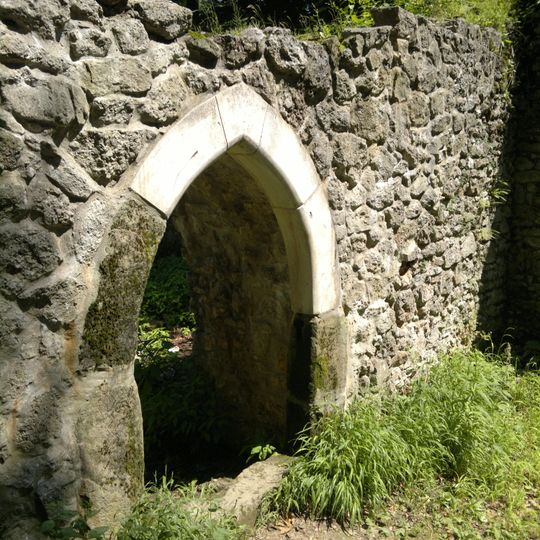
Šostýn, Castle ruin in Kopřivnice, Czech Republic.
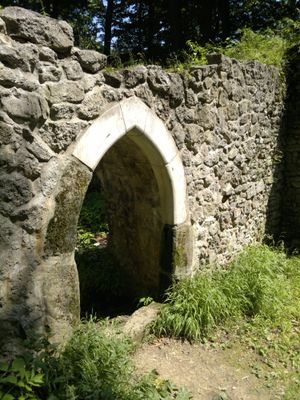
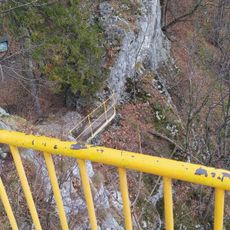
Šostýn is a ruined Gothic castle on a hill at 442 m above sea level, 1.5 km southeast of Kopřivnice. Visitors see the exposed foundations of the bergfried, the partly reconstructed cellar rooms of the palace, remains of the entrance buildings and other structures, scattered masonry and terrain modifications cut into the rock and earth.
Probably built between 1280 and 1290 at the request of Jindřich of Hückeswagen, the castle is first documented in 1347, when it belonged to Olomouc bishop Jan VII. In 1420 troops of bishop Jan XII. Železný stormed and demolished it during the dispute over its possession, and by 1467 bishop Tas of Boskovice noted it was derelict and not worth repairing.
The name Šostýn derives from the German Schauenstein, recorded in variants such as Schawenstein and Schowenstayn. The site is freely open, and the exposed donjon foundations and partly reconstructed palace cellars are what visitors walk among today.
The ruin lies 1.5 km southeast of Kopřivnice centre at 442 m above sea level; the slope is steep on the southwest and west, gentler to the north and east, where a rampart links to a plateau with a pond. The cellars of the palace are partly reconstructed and the grounds are freely open to the public.
The most notable find at the site is a small ivory statuette known as the Venus of Šostýn. From 1814 the Kopřivnice potter Ignác Raška used the ruin's stone for his workshop, and over thirty years the walls were levelled and in places even the foundations were carted away.
The community of curious travelers
AroundUs brings together thousands of curated places, local tips, and hidden gems, enriched daily by 92,342 contributors worldwide.