Hnojový Dům, Mountain cottage in Jizerka, Czech Republic
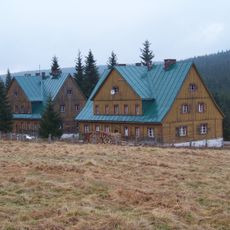
Hnojový Dům is a timber-framed mountain chalet in Jizerka, built largely of wood in the style of the Isergebirge houses. The original chalet dated from between 1699 and 1769; after a fire on 24 August 1995 destroyed it and its museum, Gustav Ginzel roofed the surviving stone stable, wintered there, and by 1997 a new log building stood on the site.
The wooden chalet was built between 1699 and 1769. After World War II it stood empty and was used as a cow stall, then for calves and sheep. Gustav Ginzel bought it on 2 May 1964 for 345 Czechoslovak korunas; it burned down on 24 August 1995, and by 1997 volunteers had rebuilt the timbered house.
Gustav Ginzel turned the house into a private cabinet of curiosities, filling it with travel souvenirs, old books and oddities he obtained cheaply or received from guests. Among the items were large rock crystals, a Tuareg sword, Peruvian Indian clothing, lava from Popocatépetl, a Shuar shrunken head, mammoth-tree cones, Tibetan prayer tablets, a brick from the Tower of Babel and Sahara sand. The whole collection burned in the 1995 fire and was rebuilt with new exhibits.
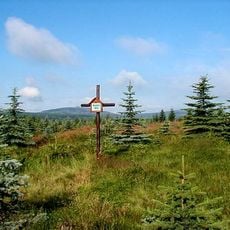
The house stands in Jizerka, a hamlet of Kořenov, and since 1983 lies directly on the Eisenach–Budapest international mountain trail, which Gustav Ginzel renamed "Eisenach–Misthaus–Budapest". Visitors reach it on foot along marked hiking paths; the stream Ginzel diverted still supplies the house with water.
The house earned its distinctive name when Gustav Ginzel sold the accumulated manure stored inside for more money than the building itself cost to purchase. This peculiar transaction became a local talking point for the area.
The community of curious travelers
AroundUs brings together thousands of curated places, local tips, and hidden gems, enriched daily by 92,304 contributors worldwide.