Čertova stěna-Luč, National nature reserve in Loučovice, Czech Republic
Čertova stěna-Luč is a 140-hectare national nature reserve along the Vltava between Loučovice and Vyšší Brod. Its canyon walls are built of Eisgarn-type two-mica granite, with extensive stone fields and tors; the summit wall of Čertova stěna holds the boulder called Čertova kazatelna, and the Luč summit (933 m) lies opposite.
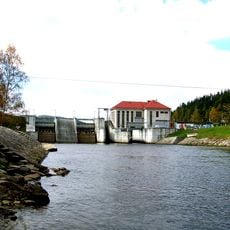
The reserve was created in 1992 by merging two separate reserves on opposite banks of the Vltava: Čertova stěna, established in 1956 on the right bank over 10 ha, and Luč, established in 1934 on the left bank over 95 ha. In 2005 it was enlarged on the right bank and the Vltava channel between the stone sea and Loučovice was added.
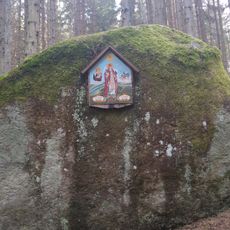
The name comes from a legend that the devil tried to build a dam on the Vltava to wash away the newly built Vyšší Brod monastery, but ran out of time at dawn; a large boulder with a hollow is said to be his thumbprint. The tale inspired Bedřich Smetana's 1882 opera Čertova stěna. The hill Strašidelník was said to be a pagan site where Slavs worshipped Svatoroh.
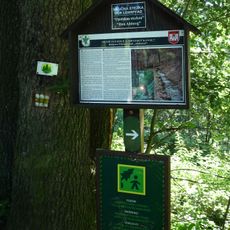
The reserve is accessible via marked walking trails, with viewpoints such as the Devil's Pulpit offering views across the river and surrounding landscape. Spring through autumn is the best time to visit, when weather is stable and the ground remains firm for walking.
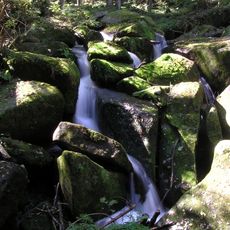
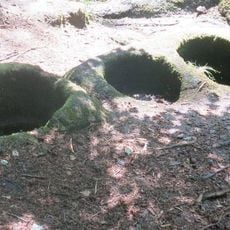
The reserve contains a natural water course called Devil's Streams where boulders have been carved into unusual shapes by the river over millennia. Some of these rocks display deep pot-shaped depressions formed by constant water movement and erosion.
The community of curious travelers
AroundUs brings together thousands of curated places, local tips, and hidden gems, enriched daily by 92,268 contributors worldwide.