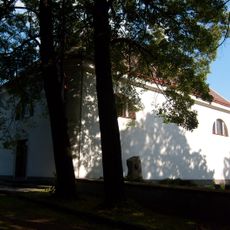
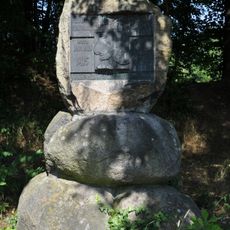
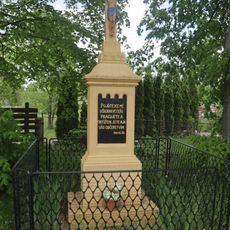
České Lhotice Celtic oppidum, Celtic oppidum in Hradiště, Czech Republic
České Lhotice Celtic oppidum is a two-part fortified site on a spur above the Chrudimka river, with an 8-hectare outer bailey on the east and a 23-hectare inner rampart on the west. The best-preserved feature is the triple fortification on the east side of the inner rampart, built as a Pfostenschlitzmauer with a rock-cut ditch originally 3.4 m deep.
The fortifications date to the late La Tène period, in the 2nd century BC, and the oppidum was abandoned after the mid-1st century BC. The site had already been settled in the Paleolithic, Neolithic, Eneolithic, Late Bronze Age and early Hallstatt period, and finds also attest Roman-era and medieval occupation. The first finds were recorded in 1847, when stone was taken from the collapsed rampart; Ivan Borkovský examined the site in 1943 and Milan Princ between 1971 and 1987.
The scattered foundations and earthworks reveal how different groups of people lived here over thousands of years, making this place a layered record of habitation. Visitors can see how the landscape itself was shaped by these successive settlements.
A marked trail takes visitors through the archaeological remains with signage explaining Celtic life and the settlement layout. The site sits on a plateau with natural slopes, so sturdy footwear and care on uneven ground are recommended for a comfortable visit.
The oppidum probably stood on a branch of the Amber Road and mediated trade between the oppida of Závist and Staré Hradisko. Its hinterland held graphite, iron ore, copper and gold deposits, and the site is thought to have controlled their extraction, though no direct evidence of mining or ore processing was found there.
The community of curious travelers
AroundUs brings together thousands of curated places, local tips, and hidden gems, enriched daily by 94,499 contributors worldwide.