Červená jáma, Mining sinkhole in Hřebečná, Czech Republic
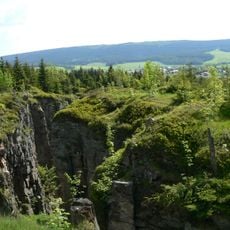
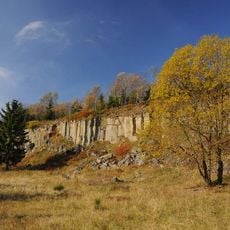
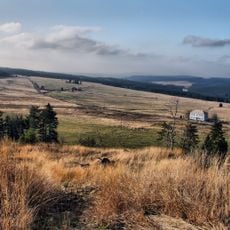
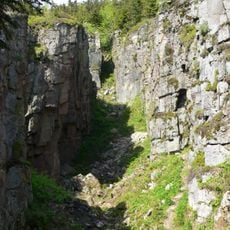
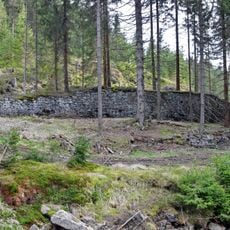
Červená jáma is a large open-cast mining pit (pinga) in the Hřebečná cadastral area, with underground mining collapses also present. It is 230 metres long, up to 30 metres wide and about 20 metres deep, lying in the Ore Mountains near the deserted mining settlement of Bludná.
Tin and iron were mined near the vanished settlement of Bludná from the 16th to the 18th century, and Červená jáma is the large open-cast pit left by that early modern work, with collapses from underground mining also visible. In 2013 the Ministry of Culture declared it a cultural monument within the Hřebečná Tin Mine complex, alongside the Mauritius mine. With the mining traces at Horní Slavkov it is the largest remnant of early modern ore mining in the Czech Republic.
The name Červená jáma means "Red Pit", and the German names Rote Grube and Georgspinge also appear in old records. Tin and iron were mined in the area around the vanished mining settlement of Bludná from the 16th to the 18th century. Since 2013 the pit has been protected as part of the Cínový důl Hřebečná complex, together with the Mauritius mine.
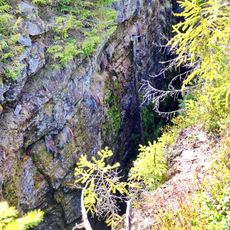
Červená jáma lies in the Hřebečná cadastral area of Abertamy, near the vanished mining settlement of Bludná in the Ore Mountains. The depression measures about 230 m long, up to 30 m wide and roughly 20 m deep, with sunken pits from underground workings alongside the open excavation. The ground is uneven, so wear sturdy footwear.
The rock layers visible here display a clear record of how mining methods and techniques changed over centuries at this location. This geological documentation in stone helps visitors grasp the long story of resource extraction in the region.
The community of curious travelers
AroundUs brings together thousands of curated places, local tips, and hidden gems, enriched daily by 93,350 contributors worldwide.