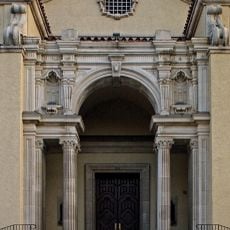
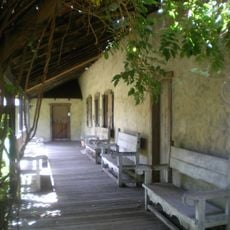
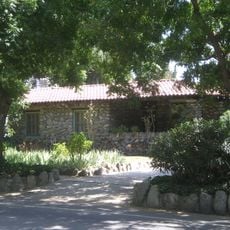
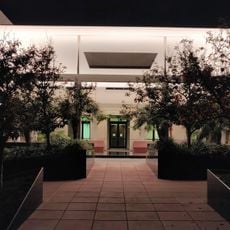
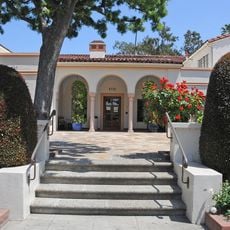
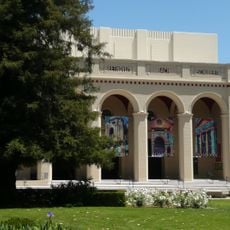
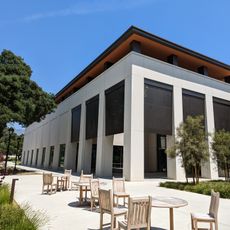
Raymond M. Alf Museum of Paleontology, Natural history museum at The Webb Schools, Claremont, United States.
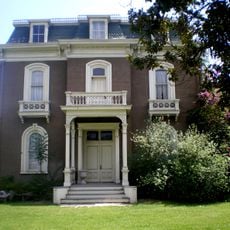
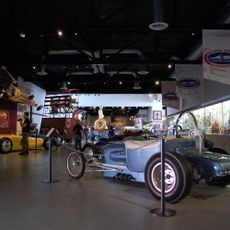
The Raymond M. Alf Museum of Paleontology occupies two circular 4,000-square-foot halls inside a two-story building from 1968. The upper Hall of Life, renovated in 2011, follows a time spiral from single-celled organisms to human civilization, with a cast of the world's largest trilobite, dinosaur skull casts and an Allosaurus skeleton. The lower Hall of Footprints holds trackways made by dinosaurs, camels, spiders and elephants, plus complete camel and bear-dog skeletons mounted over fossil tracks.
The institution began in the 1960s after paleontologist Raymond Alf had discovered ancient fossil remains decades earlier and organized field expeditions for students. These expeditions became the foundation of the museum and its teaching mission.
Students from the Webb Schools participate in hands-on fossil work and excavations, learning how real scientific research happens. This direct involvement connects their school experience to active paleontological practice.
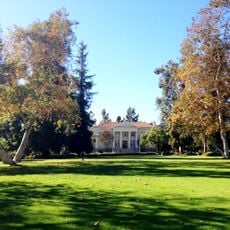
The museum sits on a private school campus and is open to visitors during regular school hours. It is wise to check opening times in advance, as access follows the school calendar.
The museum holds about 140,000 specimens, and 95% were found by Webb students on fossil-collecting expeditions called "Peccary Trips" in California, Utah and Montana. Its track collection is widely recognized as one of the most diverse in the world.
The community of curious travelers
AroundUs brings together thousands of curated places, local tips, and hidden gems, enriched daily by 92,739 contributors worldwide.