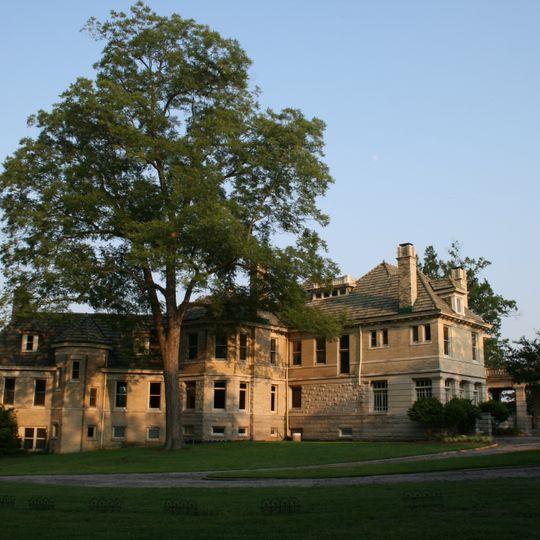
Greystone, historic house in Durham, North Carolina, United States
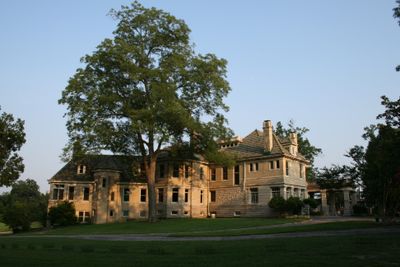
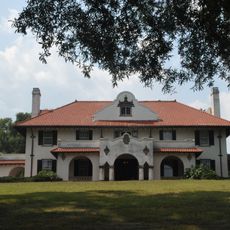
Greystone, also known as the James E. Stagg House, is a 2+1⁄2-story, six-bay Châteauesque-style dwelling in Durham, North Carolina, designed by Charles Christian Hook and built in 1911. It combines granite, limestone, and brick, with a deep porch and porte cochere, projecting bays with conical roofs, tall chimney stacks, and a high hipped roof with numerous dormers covered in heavy yellow-green clay tiles.
Greystone was designed by architect Charles Christian Hook and built in 1911 as the James E. Stagg House. About 1961 the mansion was divided into six apartments, a conversion that kept the building in use. It was listed on the National Register of Historic Places in 1982.
Greystone takes its name from the granite and limestone of its walls, built for James E. Stagg in 1911. Since about 1961 the former single-family mansion has been divided into six apartments, so the house is a residence again rather than a museum; visitors see it from the street, where the porte cochere and conical-roofed bays remain the recognizable features.
Greystone stands at 35.99220, -78.90890 in Durham, Durham County, North Carolina. It is a private dwelling divided into six apartments since about 1961, so visitors view the granite, limestone and brick exterior and the clay-tiled roof from the street rather than entering. The six-bay facade and porte cochere are best seen from the public sidewalk.
The house was divided into six apartments around 1961, a conversion that kept the 1911 Hook-designed structure standing rather than replaced. Look for the porte cochere, a covered drive-through porch where carriages once dropped passengers at the door.
The community of curious travelers
AroundUs brings together thousands of curated places, local tips, and hidden gems, enriched daily by 92,722 contributors worldwide.