Manley-Lefevre House, Historic residence in Dorset, United States.
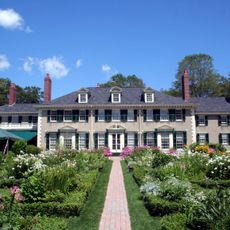
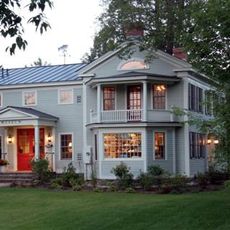
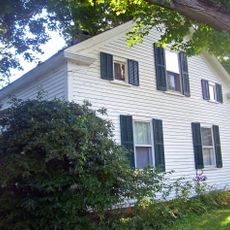
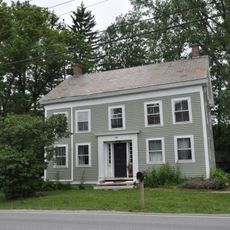
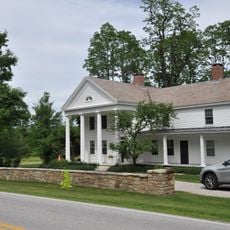
The Manley-Lefevre House is a two-and-a-half-story marble house at 1161 Dorset West Road, about 2 miles south of Dorset village. Its original main block is built of ashlar marble 20 inches thick, laid in irregular courses, with a side gable roof and brick chimneys set into the marble end walls. The front entrance keeps its original flanking sidelights, and additions extend to the rear.
Martin Manley built the main block before 1820 on land his father George had bought; the ashlar marble was probably finished on site, with dressed trim from a South Dorset marble works. In 1908 Edwin Lefevre, Sr., an author and entrepreneur who founded Dorset's first electric company, hired New York architect Eugene Lang for additions and garden designer Charles Downing Lay for the grounds. The property joined the National Register of Historic Places in 1990.
The Marble House Project, an arts residency organization, occupies the farm; its artists live and work in outbuildings added or adapted as residences and studios. The name Lefevre recalls Edwin Lefevre, Sr., an author and entrepreneur who bought the property in 1908 and founded the first electric company serving Dorset.
The house sits at 1161 Dorset West Road, about 2 miles (3.2 km) south of Dorset village, on a 100-acre farm estate. It is a private residence run as the Marble House Project, so the house and studios are not open to visitors; the residency programme is entered by application. Hiking trails on the grounds lead to the old quarries.
The marble used in construction came directly from quarries on the property or nearby West Rutland, with finishing likely completed on-site during the initial building. This made the house's creation a local enterprise that took full advantage of available materials.
The community of curious travelers
AroundUs brings together thousands of curated places, local tips, and hidden gems, enriched daily by 92,773 contributors worldwide.