Jesse Andrew House, Greek Revival residence in West Lafayette, US
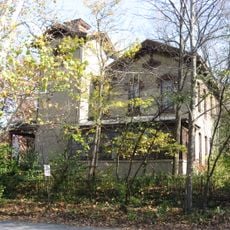
The Jesse Andrew House is a two-story Greek Revival structure on the south side of West Lafayette, near the Purdue campus. Its ell-shaped plan has a gable roof and a small hip-roofed rear wing. The east facade is three bays wide, with two-over-two double-hung windows under hood molds; an 1880s wooden porch with square columns, dentil frieze and a balustraded deck covers the ground floor.
Jesse Andrew, one of the 43 settlers who established West Lafayette's town government in 1866, built this house in 1859 and drew up the town's original plat. The house stayed in the Andrew family until 1982, passing to his son Jesse Charles Andrew in 1881, then to Thomas M. Andrew, first president of the Purdue State Bank, and to Joseph H. Andrew of the American Red Cross. It was listed on the National Register of Historic Places for its role in the city's founding.
The building reflects how the community grew around Purdue University by transforming from a family home into student apartments. This change shows the relationship between the university and the surrounding neighborhood over time.
The house stands on the south side of West Lafayette near the Purdue campus, with its main east facade facing the street. It is a private residence split into two apartments, each with its own entry door on the ground floor, so visits are limited to viewing the exterior, the 1880s porch and the gable end.
The Andrew family maintained ownership of the property through most of the 1900s before it eventually became student housing. This long family connection followed by the residential shift offers insight into how university towns reshape older neighborhoods.
The community of curious travelers
AroundUs brings together thousands of curated places, local tips, and hidden gems, enriched daily by 93,645 contributors worldwide.