Yamashiro Historic District, Historic estate in Hollywood Hills, Los Angeles, United States
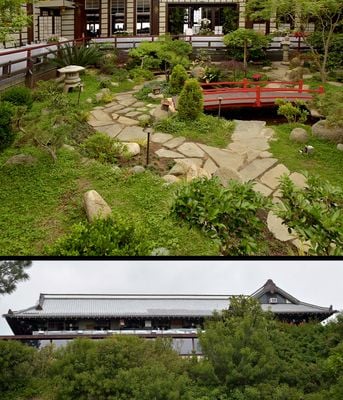
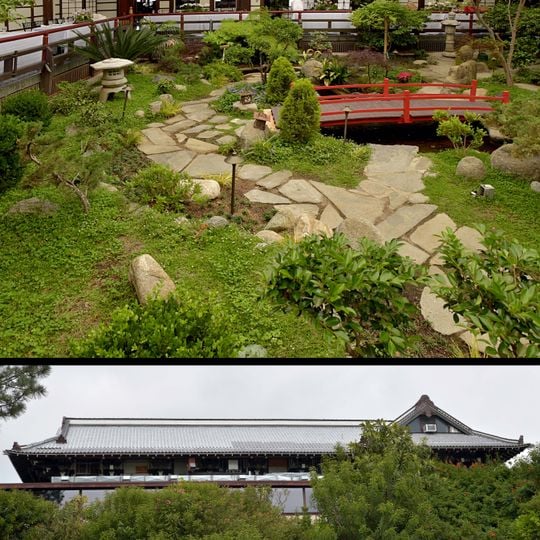
Yamashiro Historic District is a Japanese-inspired estate set on a hillside in the Hollywood Hills featuring reconstructed palace buildings, gardens, and authentic Asian art pieces from the original collection. The property encompasses nine preserved structures, including the main building which currently operates as a restaurant offering views across Los Angeles.
Two German-American brothers built this estate between 1911 and 1914 as a display for their Asian art collection. The site later became a fashionable gathering place in Hollywood, experienced decline during World War II, and eventually transformed into a dining establishment.
The name yamashiro means "mountain castle" in Japanese, given because the villa sits atop a hill. In the 1920s the site drew the 400 Club, a circle of film-industry figures, and later served as a set for films including The Teahouse of the August Moon (1956) and Kill Bill (2003). The restaurant still serves Asian dishes in the former villa.
The property sits elevated in the Hollywood Hills with parking available for those visiting the restaurant or exploring the grounds. A vehicle is advisable for access since the location sits away from main transit routes and public transportation is limited.
The Bernheimer brothers' collection, amassed in Japan and China, included ukiyo-e prints, silk paintings, Buddhist sculptures, jades and bronzes; much of it was auctioned in the early 1920s. During the Second World War the villa was disguised as a boys' military school, then an apartment complex, to hide its Japanese design after vandalism. In 2024 the property was listed for sale at $100 million.
The community of curious travelers
AroundUs brings together thousands of curated places, local tips, and hidden gems, enriched daily by 92,600 contributors worldwide.