Economy of Mauritania, National economy in Mauritania
Mauritania's economy rests on agriculture, mining and livestock, with iron ore supplying almost 50% of total exports. The first deep-water port opened near Nouakchott in 1986, serving coastal waters that rank among the world's richest fishing grounds. Drought and mismanagement built foreign debt, and in March 1999 the government signed a $54 million ESAF agreement with the World Bank and IMF.
Severe droughts in the 1970s and 1980s pushed nomadic communities and farmers toward cities, reshaping the country's economic structure. This shift shaped modern work patterns and population concentration in larger centers.
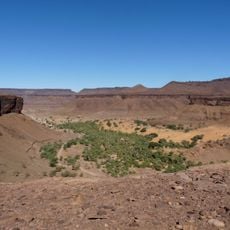
Mauritania issued its own currency, the ouguiya, in 1973, replacing the CFA franc used in neighbouring Mali, Senegal and Niger. Fishing exports rose from one billion ouguiya in 1978 to 30 billion in 1986, about 70% of total export value. In oases, a date palm yields roughly 100 kg of dates a year under favourable conditions.
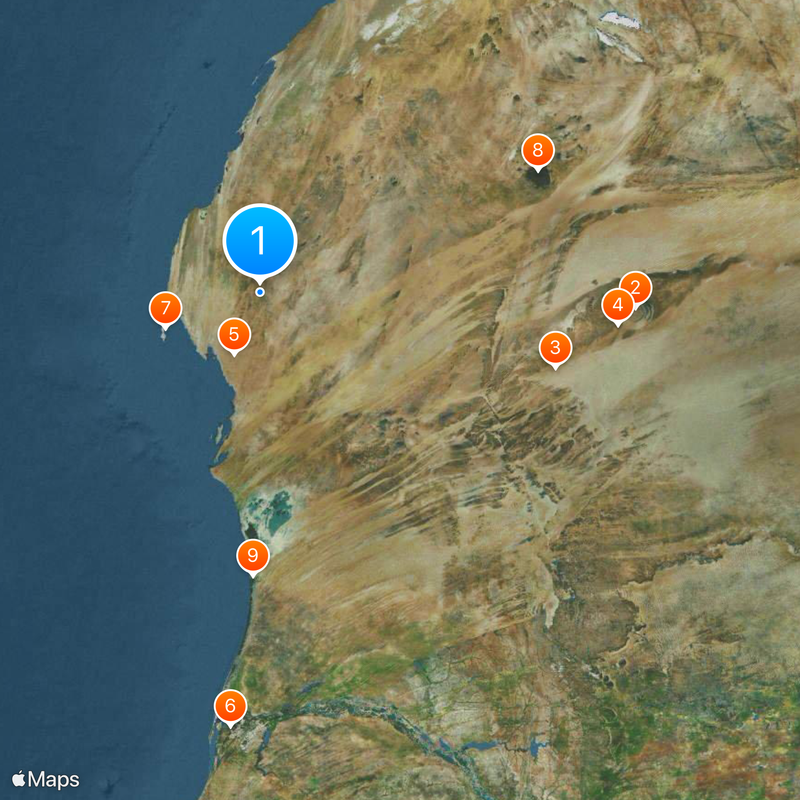
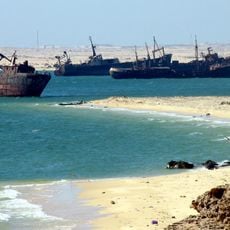
The port of Nouakchott, opened in 1986 as the country's first deep-water port, is the main gateway for imports and fish exports; the iron ore trade runs through Nouadhibou instead. The 2 km ore train from Zouérat to Nouadhibou is the longest in the world. Mining sites such as the Tasiast gold mine lie in the interior, far from the coast.
Underwater gas reserves were discovered in 2015 at the maritime border between the country and Senegal, raising hopes for future energy resources. These reserves could shift economic direction in coming decades, but are not yet exploited at large scale.
The community of curious travelers
AroundUs brings together thousands of curated places, local tips, and hidden gems, enriched daily by 92,586 contributors worldwide.