National Museum of Iraq, Archaeological museum in Baghdad, Iraq
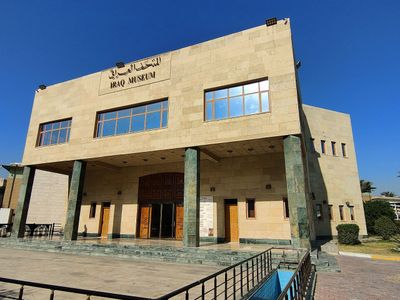
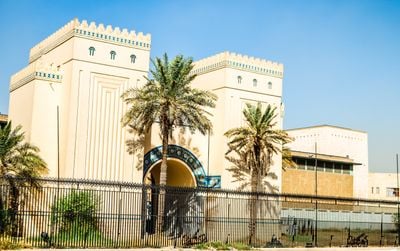
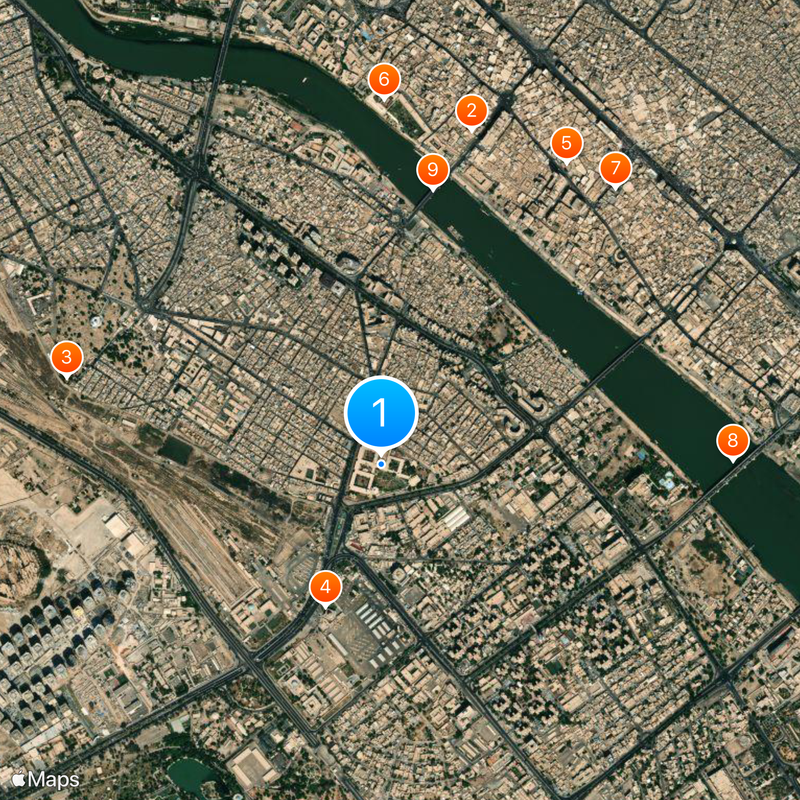
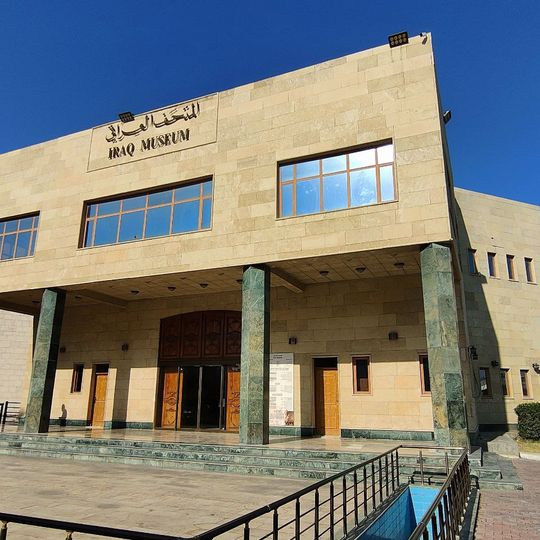
The Iraq Museum is a two-story building of about 45,000 square meters in Baghdad's Al-Salihiyyah neighbourhood, on the east bank of the Tigris. Its light tan stone facade has four dark green polished columns beneath a wide overhang, and raised lettering reads "IRAQ MUSEUM" in English with Arabic above. Inside, 28 galleries and vaults hold Mesopotamian, Abbasid and Persian relics.
The museum was founded in the 1920s on the initiative of British archaeologists to house finds from excavations at Ur, Nineveh and other ancient cities. Over many decades the collection grew steadily until political events in the early 21st century led to serious losses.
The museum's name changed from Baghdad Antiquities Museum to Iraq Museum with the 1966 move to Al-Salihiyyah. Exhibits are labelled in both Arabic and English, a practice dating from the British connection with the institution. A children's museum opened in 1977 to show how ancient people lived, learned and invented writing.
The exhibition rooms follow a chronological route so visitors can trace the development of civilizations in the right order. Signage is provided in Arabic and English, making orientation easier.
Some of the tablets show early examples of cuneiform writing, including administrative texts about grain stores and school exercises from trainee scribes. You can often see the pressed guide lines that helped scribes align their signs before pressing them into the soft clay.
The community of curious travelers
AroundUs brings together thousands of curated places, local tips, and hidden gems, enriched daily by 92,646 contributors worldwide.