Desert bloom, Natural phenomenon in Atacama Desert, Chile
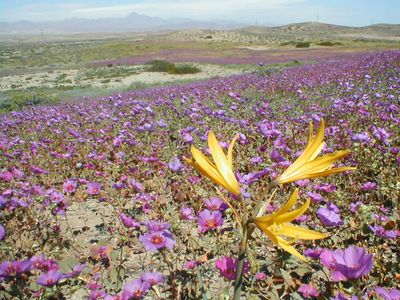
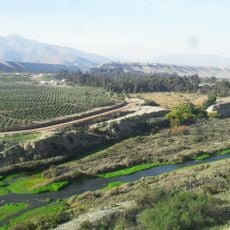
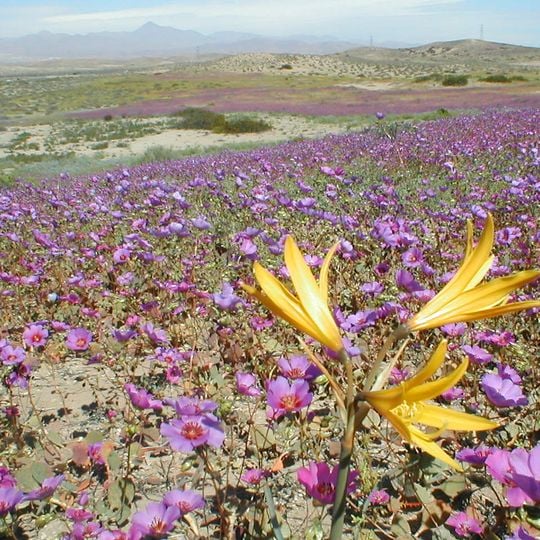
Desert bloom in the Atacama is a natural phenomenon where over 200 plant species transform the dry brown landscape into a colorful carpet of wildflowers following winter rains. The flowers cover expansive terrain, creating a flat yet visually striking landscape that stretches across several kilometers.
The phenomenon has been observed for centuries by indigenous peoples who used it to guide agricultural cycles and resource management in the region. Modern recognition came in 2023 when the government designated the area as a national park.
Local communities view the blooming period as a moment that brings people together and connects them with the land. Visitors and residents alike travel to witness this rare transformation and share the experience with others.
Bloom occurs irregularly, typically every three to five years, so tracking weather forecasts and rainfall reports before planning a trip is essential. Staying connected with local tour operators or park authorities can help you learn about blooming conditions and plan your visit accordingly.
The Atacama is one of the driest regions on Earth, with some areas receiving no rain for decades, yet after rare rainfall events, spectacular flower carpets suddenly appear. This extreme contrast between aridity and abundance makes this phenomenon truly unusual.
The community of curious travelers
AroundUs brings together thousands of curated places, local tips, and hidden gems, enriched daily by 60,000 contributors worldwide.