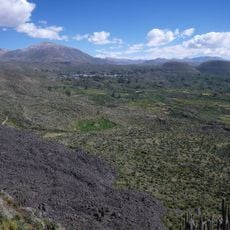
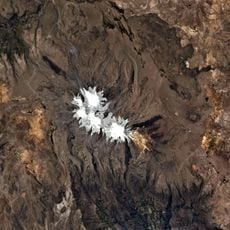
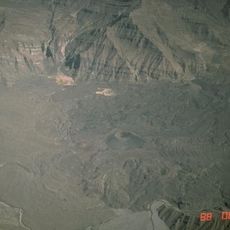
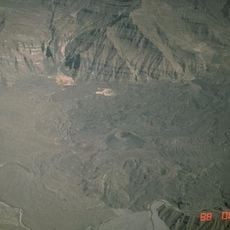
Solimana, Volcanic summit in Arequipa Region, Peru
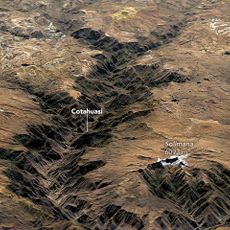
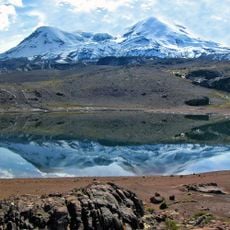
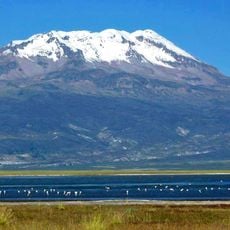
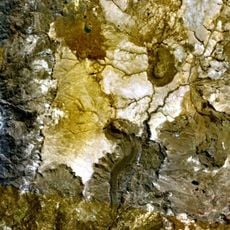
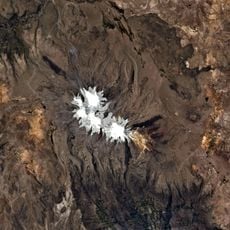
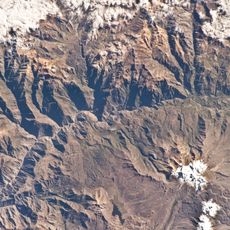
Solimana is a volcanic summit in the Arequipa Region of Peru, featuring a broad plateau and distinct slope zones. Its northern side carries glaciers, while the southeastern flank also shows ice coverage.
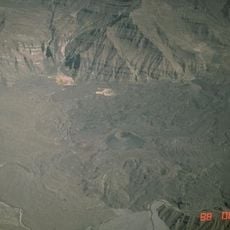
Solimana is an extinct stratovolcano active during the Miocene and Pliocene, between 4 and 1.5 million years ago; its last eruption occurred between 500,000 and 300,000 years ago. Large sector collapses of the southern flank between 3.05 and 1.5 million years ago left a caldera and gave the massif its asymmetric profile. The first recorded ascent of the central summit, 6,093 m, was made on 1 August 1970 by Mario Bignami and Julián Blanco Herrera.
Local communities regard this mountain as a sacred place tied to their spiritual beliefs. For Andean people, it belongs to a group of peaks that hold a special role in their traditional worldview.
Climbing requires alpine gear and thorough high-altitude preparation, with several days needed for acclimatization. The nearest accommodation is far away, so careful planning before departure is essential.
Solimana's andesite and dacite lavas carry hornblende, hypersthene and plagioclase, with olivine added in the phreatomagmatic deposits inside the caldera. The Upper Sencca ignimbrite, erupted 1.76 to 2.09 million years ago, may come from this volcano and filled valleys with 13 to 32 cubic kilometres of material.
The community of curious travelers
AroundUs brings together thousands of curated places, local tips, and hidden gems, enriched daily by 93,551 contributors worldwide.