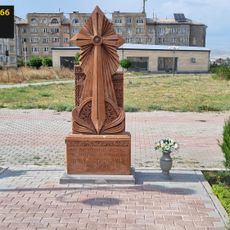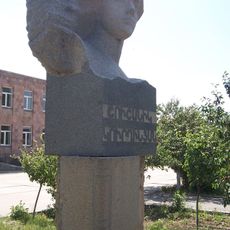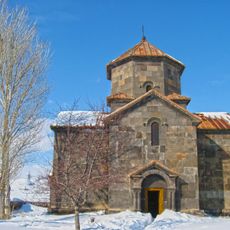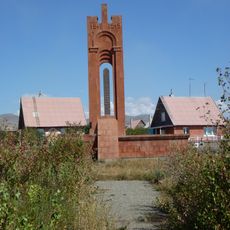
Marmashen monastery, Medieval religious complex in Shirak Province, Armenia
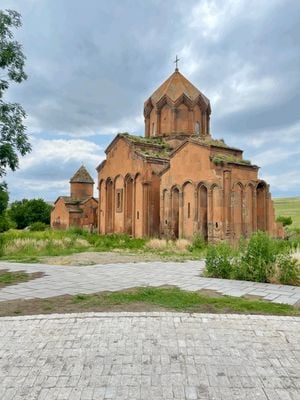
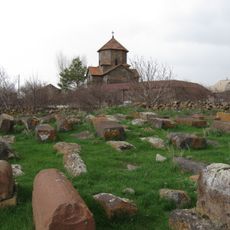
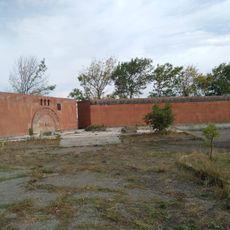
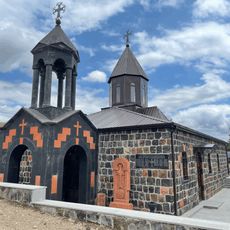
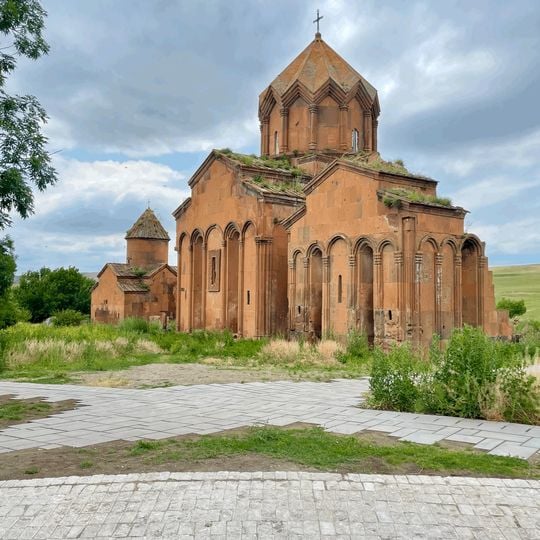
Marmashen is a monastery complex in northern Armenia, near the village of Vahramaberd in Shirak Province, built from orange tufa stone. It holds several cross-dome churches arranged around a main church, along with the foundations of a gavit, which is a traditional Armenian narthex.
Prince Vahram Pahlavuni began building the complex in 988, and wall inscriptions record that the main church was finished in 1029. Further sections were added over the following centuries before the site gradually fell into disuse.
The monastery's name is tied to a local tradition recorded by architect Toros Toramanian, and Grigor Magistros' letters refer to the walled town as Mariam Nishin. Inscriptions survive on the walls: Vahram Pahlavuni's on the south wall of the main church marks it as his family burial place, and Queen Mariam's records a vow. Grigor, archbishop, and his brother Kharip Magistros left a text on the north wall about the 1225 repairs.
The complex sits in open land on the edge of the village and is easy to walk through, with all the churches directly accessible. Visiting in good light helps to see the stone carvings on the facades more clearly.
The churches are built from volcanic tufa, a stone that changes color noticeably depending on the light, shifting from pale yellow to deep orange as the sun moves. This makes the appearance of the complex look quite different at different times of day.
The community of curious travelers
AroundUs brings together thousands of curated places, local tips, and hidden gems, enriched daily by 92,765 contributors worldwide.