Spitakavor Monastery, Armenian monastery in Gladzor, Armenia
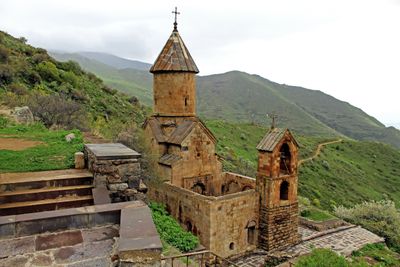
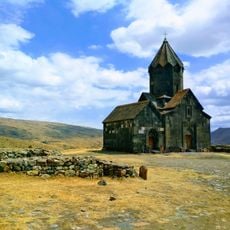
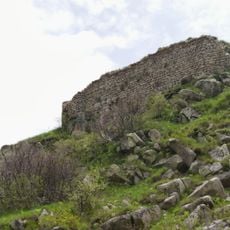
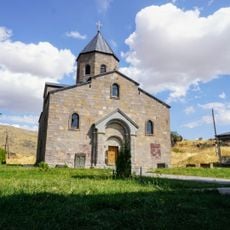
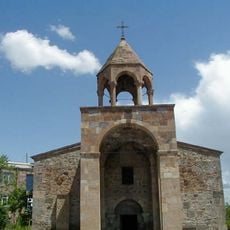
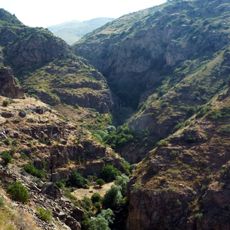
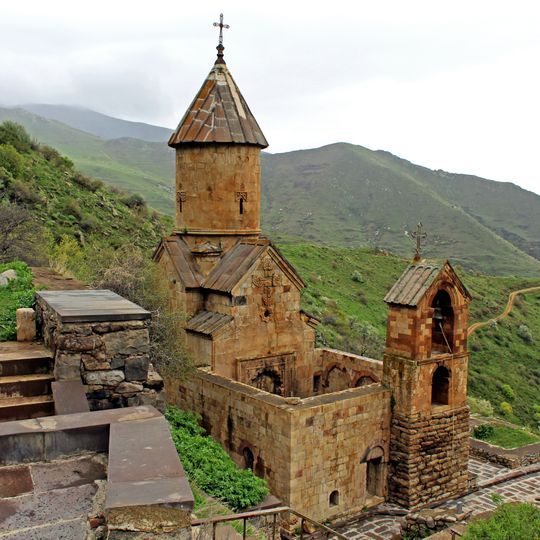
Spitakavor Monastery rises from white felsite stone on the slopes of Mount Teksar, combining a church, bell tower, and vestibule within fortified stone walls. The entire complex forms a self-contained ensemble held together by sturdy masonry.
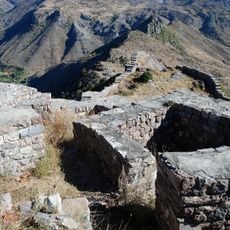
Prince Eachi of the Proshyan dynasty began the Church of the Holy Mother of God and died in 1318; his son Amir Hasan II finished it in 1321. The narthex followed between 1321 and 1330, when Hovhannes Proshian and his wife Tadzna added a three-story bell tower. Under Father Superior Avagter the monastery became a cultural and educational center after Gladzor University closed in the 1340s. Timur's armies later destroyed the narthex and walls, and the monastery operated until Shah Abbas's forced resettlement of Armenians in 1604.
Villagers of Vernashen call the monastery Tsaghkavank, the Monastery of Flowers, for the springtime blooms around it. A folk tradition holds that Spitakavor, Arkazi Surb Khach and Tanade monasteries once relayed news by fire signals. The church's west portal carries a relief of the Virgin and Child, and the east apse conch a full figure of Christ inscribed "Jesus Christ".
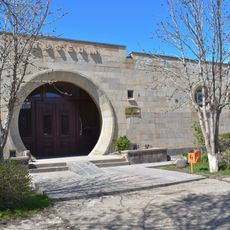
The site is reached via an 8.4-kilometer dirt track from the Gladzor University Museum, requiring either a four-wheel-drive vehicle or a walking approach. Visitors should wear sturdy shoes and allow extra time, as conditions can vary with weather.
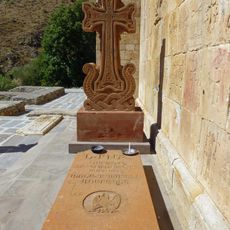
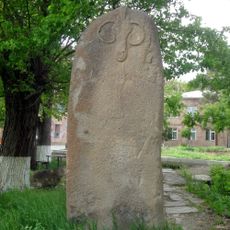
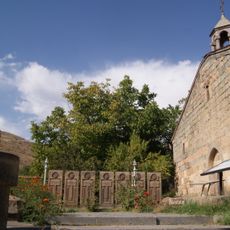
Garegin Nzhdeh died in a Soviet prison in 1955; his remains were moved secretly from Vladimir in 1983, and the main part was reburied in the monastery yard in 1987. The basalt tombstone and red tufa cross-stone were placed in 1989, the cross carved by Gegham Sahakyan. The stone bears Nzhdeh's words: "Peoples incapable of defending themselves are punished by death."
The community of curious travelers
AroundUs brings together thousands of curated places, local tips, and hidden gems, enriched daily by 94,045 contributors worldwide.