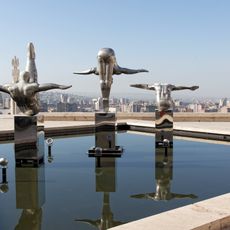
Yerevan Cascade, Monumental stairs in Kentron district, Armenia
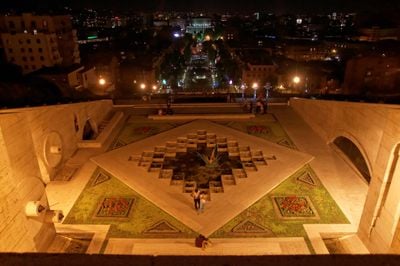
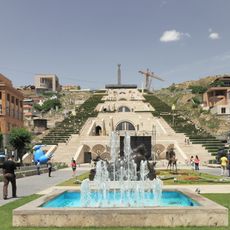
Yerevan Cascade is a monumental stairway of five terraces linking Kentron district with the Kanaker-Zeytun administrative district. Its 302-metre length includes 555 to 572 steps, internal escalators and exhibition halls. Built of milky white tuff and travertine, it has reliefs with khachkar elements and grapevine, pomegranate and tree-of-life ornaments.
Architect Alexander Tamanyan proposed linking the city centre to the Kanaker hills with terraces in his 1920s master plan, but the project went unfunded. In 1967 the "Revived Armenia" obelisk was placed on the Kanaker plateau, prompting Jim Torosyan, Sargis Gurzadyan and Aslan Mkhitaryan to design the Cascade in the early 1970s. Construction began in 1980, stopped in the late 1980s, and resumed in 2002; the Cafesjian Museum of Art opened in 2009, and the complex remains unfinished.
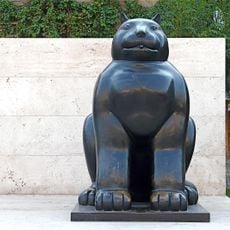
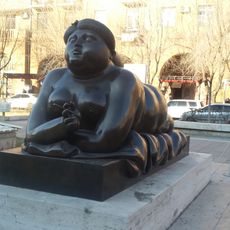
The name refers to the cascading arrangement of the terraces that rise one above the other. Visitors encounter outdoor sculptures by contemporary artists from Armenia and beyond, displayed in open spaces across multiple levels.
Visitors can reach all levels using the internal elevators or climb the outdoor steps, with the complex remaining open to the public throughout the day. The lower terraces offer shaded areas to rest, while the upper levels provide open views across the city.
Each terrace displays its own reliefs and patterns carved in travertine stone with Armenian symbols, varying throughout the entire height. The Art Deco design was rare in Soviet-era Armenia, making this approach uncommon for its time.
The community of curious travelers
AroundUs brings together thousands of curated places, local tips, and hidden gems, enriched daily by 92,593 contributors worldwide.