Hufangalupe, Natural land bridge in Tongatapu, Tonga.
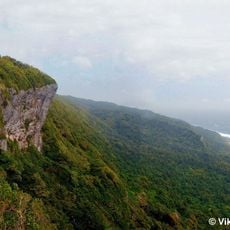
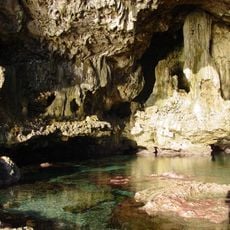
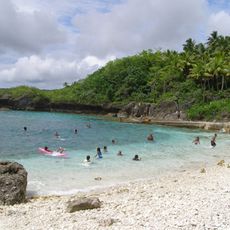
Hufangalupe is a natural land bridge on the southeastern coast of Tongatapu, Tonga, formed when the roof of a sea cave collapsed. Waves often break near its entrance. A beach of the same name lies nearby.
The formation developed over centuries through ocean erosion that gradually wore away rock and eventually caused a sea cave roof to collapse. This geological process shaped one of Tongatapu's most visible natural landmarks along its southeastern shore.
The name Hufangalupe translates to Pigeon's Gate in Tongan, showing how locals connect natural formations to animals and traditional naming customs. This practice reflects how communities embed meaning into the landscape through language.
Hufangalupe lies on the southeastern coast of Tongatapu, where the land bridge opens over the sea. The waves often break near the entrance, so keep back from the edge and watch your footing on the rock. The nearby beach carries the same name.
Local tradition holds that the demigod Maui threw his spear through the earth here, opening the hole that became the bridge. The site also appears in Dennis Paul's novel Subloon, where it serves as the setting for the climax, and in the 2014 film When the Man Went South.
The community of curious travelers
AroundUs brings together thousands of curated places, local tips, and hidden gems, enriched daily by 92,611 contributors worldwide.