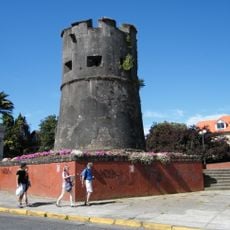
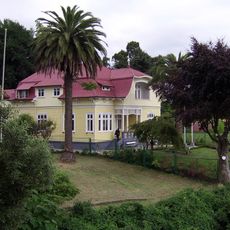
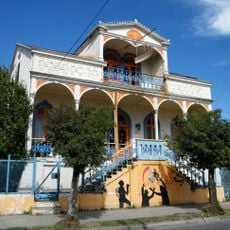
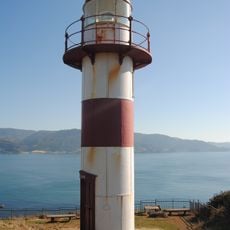
Torreón Picarte, Spanish colonial fort in Valdivia, Chile.
Torreón Picarte, also called Torreón del Barro, stands at Ramón Picarte street no. 1244, on the old road to Los Llanos. It is a tower of fired clay masonry with walls 60 cm thick at the base and 30 cm at the top, raised on solid ground. External stairways gave access, and the interior served as warehouse and granary.
Torreón Picarte was designed in 1768 by Irish engineer Juan Garland as part of a defensive network for Valdivia, together with Torreón Los Canelos, and was built in 1774 under governor Joaquín de Espinoza y Dávalos. It guarded the northern land and river approach on the old road to Los Llanos, while Los Canelos watched the sea entrance. In 1781 Antonio Duce Oliveros included it in the city's defensive system during the war with England, and on 15 February 1785 it held Tomás de Figueroa as a prisoner.
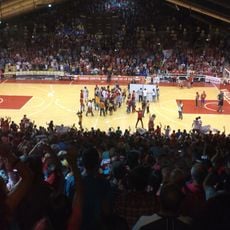
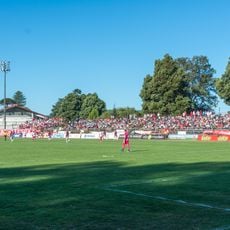
The tower gives its nickname to Club Deportes Valdivia, known as "El Torreón", whose crest was designed by social worker Karen Narváez after the monument. The club carries the image across Chile and abroad, so the tower's silhouette travels with the team to every match.
The tower stands at Ramón Picarte street no. 1244, on the old road to Los Llanos, one of Valdivia's former northern entrances. Its base walls are 60 cm thick and taper to 30 cm at the top, a detail visible when walking around the exterior. The structure is a national monument, so access is limited to viewing from outside.
The tower's walls taper from 60 cm at the base to 30 cm at the top. On 15 February 1785 it held Tomás de Figueroa, jailed as an "incendiary" by the governor. Historian Ricardo Molina suggests exiled convicts from north of Concepción likely built it.
The community of curious travelers
AroundUs brings together thousands of curated places, local tips, and hidden gems, enriched daily by 92,727 contributors worldwide.