Fortín San José de Alcudia, Spanish colonial fort in Río Bueno, Chile
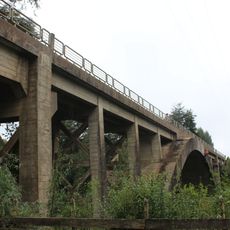
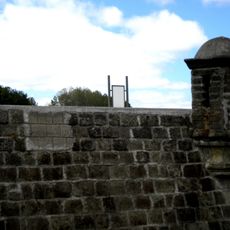
Fuerte San José de Alcudia is a Spanish colonial fort in Río Bueno featuring stone walls and a protective ditch along the river. Two silver-painted cannons point toward the waterway and bridge below.
The mission San Pablo Apóstol de Río Bueno, founded in 1779, was destroyed in the Huilliche uprising of 23 September 1792 led by Queipul and Futañirre. In 1793 Ambrosio O'Higgins ordered the mission rebuilt together with a fort named San José de Alcudia, after Manuel Godoy, Duke of Alcudia. The military engineer Manuel Olaguer Feliú directed the work, completed between 1793 and 1795.
The fort's name honours Manuel Godoy, Duke of Alcudia and finance minister to King Carlos IV of Spain, not a saint; Ambrosio O'Higgins ordered it in 1793. The site stands where the San Pablo Apóstol mission was founded in 1779 and destroyed in the Huilliche uprising of 23 September 1792, led by Queipul and Futañirre.
The fort is freely accessible with parking nearby, making it easy for visitors to arrive and explore the grounds. Several dining options within walking distance provide a chance to rest after your visit.
The fort was named San José de Alcudia by order of Ambrosio O'Higgins to honour Manuel Godoy, Duke of Alcudia and finance minister to King Carlos IV of Spain. Its walls were built of cancagua stone, in blocks measuring 40 by 60 by 40 centimetres, across a site of 3,600 square metres.
The community of curious travelers
AroundUs brings together thousands of curated places, local tips, and hidden gems, enriched daily by 94,119 contributors worldwide.