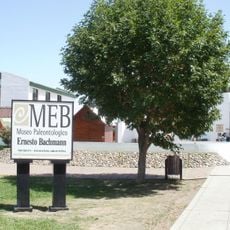
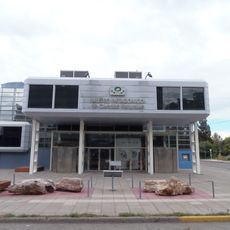
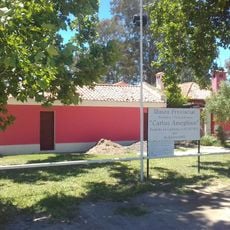
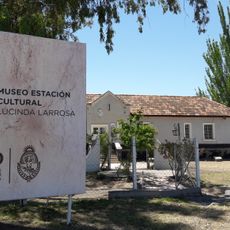
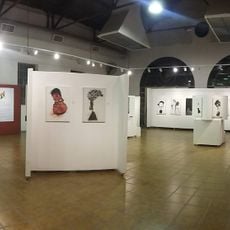
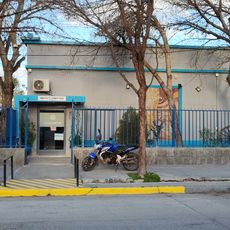
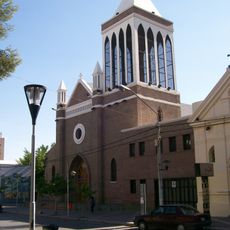
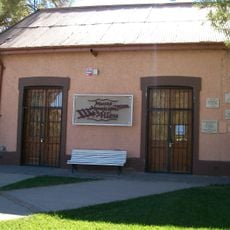
Museum of Geology and Paleontology of the National University of Comahue, Paleontological museum at National University of Comahue in Neuquén, Argentina.
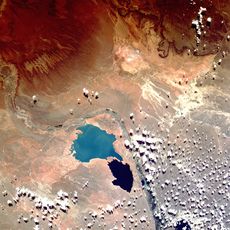
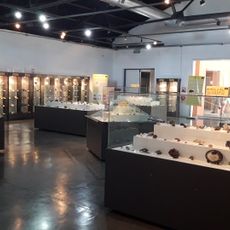
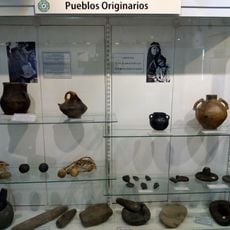
The Museum of Geology and Paleontology of the National University of Comahue stands on the northern shore of Lake Los Barreales in east-central Neuquén province. It displays dinosaurs, crocodiles, fish, turtles and plants from the Cretaceous period, and more than 90% of the pieces are original fossils, some reconstructed at natural scale.
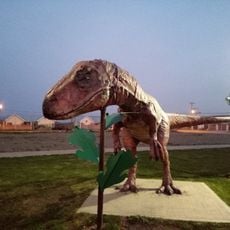
The museum stems from paleontological research carried out in Patagonia during the preceding decade, and more than 90% of the pieces on display are original. In April 2001 it built a 1.1-metre robotic replica of Abelisaurus, a dinosaur up to 9 metres long that lived 80 million years ago in Gondwana. It also holds the fragmentary remains of the second Giganotosaurus specimen (MUCPv-95), a jaw bone indicating an animal about 6.5 to 8% larger than the holotype.
The institution leads the Dino Project, connecting scientific research with educational programs through laboratory activities and guided tours for students and researchers.
The museum is located about 90 kilometers from Neuquén and offers guided tours for groups. Visitors should arrange visits in advance, particularly if coming with larger groups to ensure availability.
The museum holds the fragmentary remains of the second Giganotosaurus specimen, MUCPv-95, known only from a jaw bone. Compared with the 70 percent complete holotype, it was judged 6.5 to 8 percent larger, giving an estimated length of 13.2 metres and a weight of 8.2 tonnes.
The community of curious travelers
AroundUs brings together thousands of curated places, local tips, and hidden gems, enriched daily by 92,643 contributors worldwide.