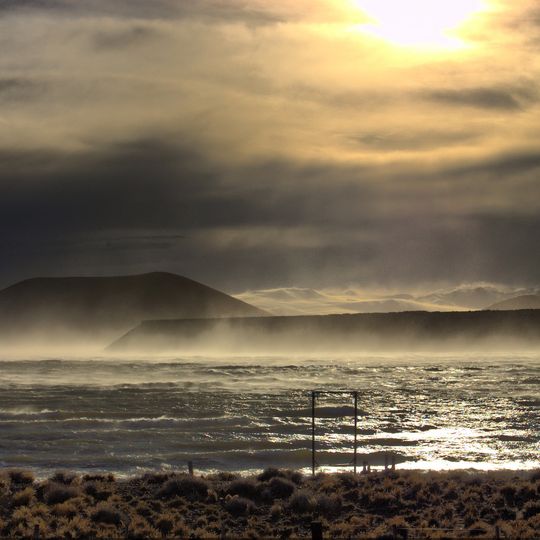
Laguna Blanca National Park, National park and Ramsar site in Neuquén, Argentina
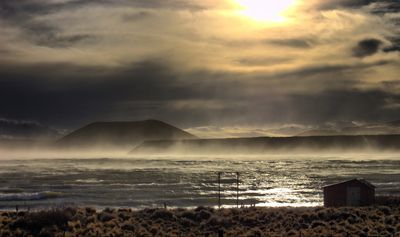
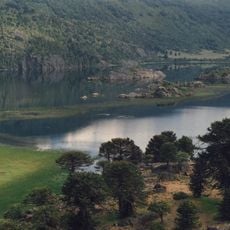
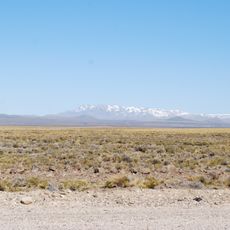
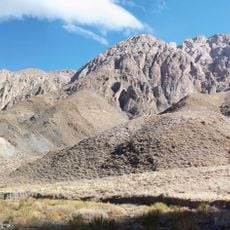
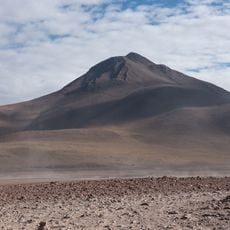
Laguna Blanca National Park is a 11,250-hectare protected area in the Patagonian steppe of Neuquén Province, Argentina. Its centrepiece is Laguna Blanca, a shallow lake of about 1,700 hectares at 1,230 metres above sea level, with a maximum depth of 10 metres. The park is a rectangle 15 km by 7.5 km, and its southwestern boundary cuts across two arms of the lagoon, leaving them outside the protected area. Eight smaller lagoons lie within the park, including Verde, Jabón, Antonio, del Molle and del Hoyo.
In July 1939, surveyor Carlos A. Sambrizzi, administrator of Lanín National Reserve, reported that the lagoon's swan population made it unique in South America. A reserve was created by decree on 31 May 1940, and decree-law 9504 of 28 April 1945 declared it a national park. Law 19292 of 11 October 1971 reaffirmed the status and created the national reserve.
The park holds traces of people who lived here long ago, visible in pottery shards and stone tools scattered across the land. These objects tell us how communities adapted to this remote landscape over generations.
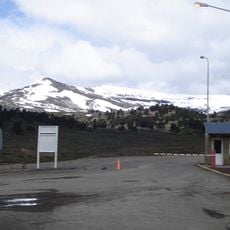
The park is accessible by provincial road, with the visitor center serving as the main starting point for exploring the area. It is best to arrive by personal vehicle and plan your visit during daylight hours to make the most of the terrain.
The Patagonian frog (Atelognathus patagonicus) once had its largest known subpopulation in this lagoon, but introduced predatory fish wiped it out there; the species now survives only in isolated ponds in the park's buffer zone. The Salamanca cave near the lagoon holds rock paintings typical of northern Patagonia.
The community of curious travelers
AroundUs brings together thousands of curated places, local tips, and hidden gems, enriched daily by 94,558 contributors worldwide.