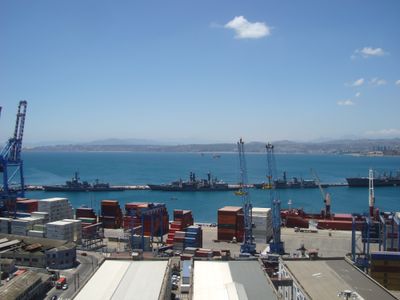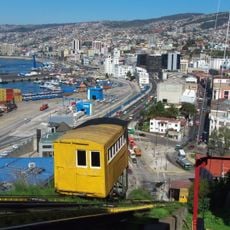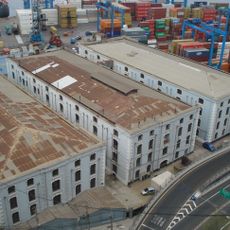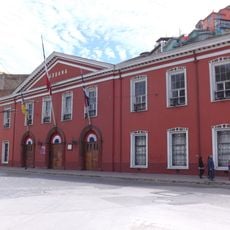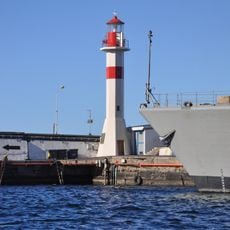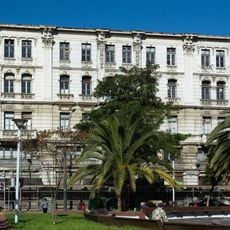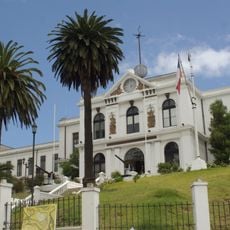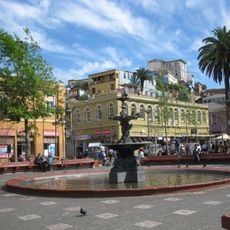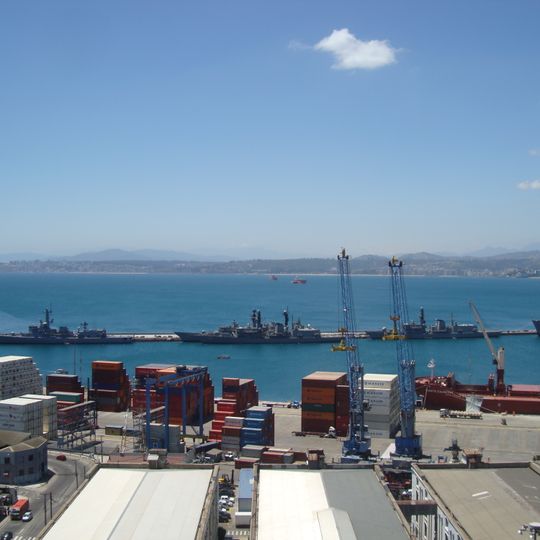
Molo de Abrigo de Valparaíso, Harbor breakwater in Valparaíso, Chile.
Molo de Abrigo de Valparaíso is a breakwater built from massive concrete blocks that extends into the Pacific Ocean to shield the harbor from powerful waves. The structure stands as a fundamental part of the port, with sections reaching significant depths offshore.
Construction began in 1912 and finished in 1930, marking a significant step forward in Chile's maritime development during the early decades of the 20th century. The project reflected the country's growing importance as a Pacific port nation.
The breakwater's starting point is Punta Duprat, named for Juan Duprat, a French citizen who set up a shipyard there in 1845. At the end of the first 300-metre section stands the Punta Duprat lighthouse, installed in 1921 with a 14.1-metre concrete tower and a paraffin-gas lamp that ran for 43 years. In 1971 it became Chile's first electric lighthouse, flashing amber every 15 seconds with a range of 20 nautical miles. The original tower was demolished in 1979 and replaced by an octagonal tower clad in ceramic tiles.
Access may be limited during certain times and visitors should verify conditions before planning a visit to the breakwater. Group visits generally need advance notification to the port authorities.
The concrete blocks used were among the world's largest during construction, showcasing the engineering achievements of that era. Some sections descend to ocean depths that were unusual for harbor structures at the time.
The community of curious travelers
AroundUs brings together thousands of curated places, local tips, and hidden gems, enriched daily by 94,560 contributors worldwide.