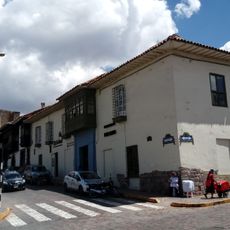
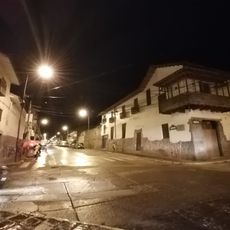
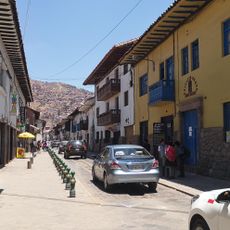
Arco de Tica Tica, Colonial arch in Cusco, Peru.
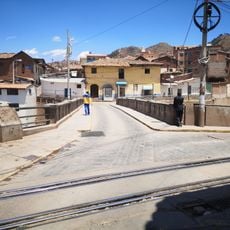
Arco de Tica Tica, also called Arco de Picchu, is a stone structure in Cusco's Santiago district built of basaltic andesite, lime and rubble. A central wall holds two semicircular arches: one for the Santa Ana railway line and one for pedestrians, with buttresses at the sides and a cross on top. The aqueduct channel runs along the upper part.
Construction of the arch was completed on June 23, 1791, under José de la Portilla, Cusco's intendant at that time. The structure was built as the Spanish colonial administration worked to improve the city's infrastructure.
The site was originally called Uroscalla in Quechua, marking where travelers lost sight of the sacred city as they journeyed away. This name reflects how important the location was in how people understood their relationship to the city.
The arch stands in the Tica Tica neighbourhood of Santiago district, on the northwestern exit of Cusco toward Poroy. Its central wall holds two semicircular openings: one for the Santa Ana railway line and one for pedestrians, with buttresses on the sides and the aqueduct channel on top. Look for the cross on the structure and the inscription inside the arch.
The structure received two separate UNESCO recognitions: first in 1983 as part of Cusco's historic center and again in 2014 for its importance to ancient road networks. This dual recognition highlights how the arch connects different periods and aspects of the region's history.
The community of curious travelers
AroundUs brings together thousands of curated places, local tips, and hidden gems, enriched daily by 92,837 contributors worldwide.