Playa Magagna, Beach and coastal settlement in Chubut, Argentina
Playa Magagna is a locality and neighbourhood of Rawson municipality, a 4.6 km coastal strip south of the Chubut river mouth, 12 km from Rawson. It is a complex of beaches: Bonita, El Faro, Cangrejales Norte, Cangrejales Sur and Santa Isabel. Houses of mixed materials stand on a strip above sea level, separated from the beach by a dune and a cliff over 30 m high.
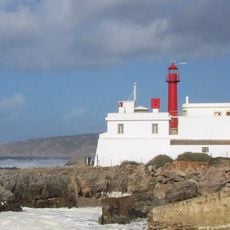
Modern settlement began on 2 October 1933, when the Servicio de Hidrografía Naval installed the Chubut lighthouse (Arg-034) on the bluff south of the mouth of the Chubut River, more than three kilometres from that point. The locality grew as a neighbourhood of Rawson municipality, 12 km from the provincial capital, and by the 2001 census it counted 76 residents in 51 households, outside the Rawson agglomeration. The 2022 census recorded 169 inhabitants.
The beach takes its name from Luis Magagna, an Italian carpenter who arrived in the early 20th century to build the doors of Rawson's church. Each year the town holds the Fiesta Provincial del Pulpo, focused on the octopus caught in the rock hollows at low tide, with local dishes served alongside conservation and study of the species.
Playa Magagna lies about 12 km south of Rawson, the provincial capital, just south of the Chubut river mouth; the coastal strip runs some 4.6 km and is split into the beaches Bonita, El Faro, Cangrejales Norte, Cangrejales Sur and Santa Isabel. The settlement sits on a strip between the sea and a cliff or barda over 30 m high, so access to the sand is by paths down from the upper ground. Low tide is the time to walk the flats and look for octopus in the holes.
At low tide, locals wade out to pull small octopuses from the rock crevices, a practice honoured by the Fiesta Provincial del Pulpo; the beach is also one of the few with petrified molluscs and other fossils in its rocks.
The community of curious travelers
AroundUs brings together thousands of curated places, local tips, and hidden gems, enriched daily by 94,701 contributors worldwide.