Basílica de San Carlos Borromeo y María Auxiliadora, Catholic basilica in Buenos Aires, Argentina
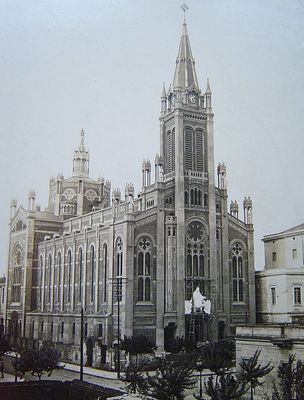
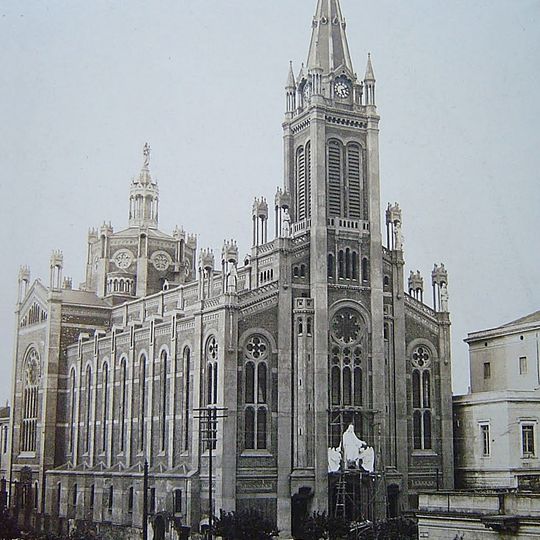
The Basílica de San Carlos Borromeo y María Auxiliadora is a Salesian church in the Almagro district of Buenos Aires, built in a Lombard Neo-Romanesque style with an octagonal dome 45 meters high, topped by a five-meter statue of Mary Help of Christians. Its bell tower rises 64 meters to a cross. Inside, three levels are linked by stairways beside the main altar: a crypt with 16 altars, a middle church, and an upper church with galleries.
The cornerstone was blessed on 24 June 1900 by Monsignor Antonio Sabatucci, delegate of Pope Leo XIII, with President Julio Argentino Roca and Teodelina Fernández de Alvear as godparents. The Italian architect Ernesto Vespignani, brother of the Salesian priest José Vespignani, directed the works from 1901. The middle and upper temples were consecrated on 1 May 1910, and Pope Pius XII elevated the church to minor basilica on 12 June 1942.
The Salesian community has shaped this place since its opening, making it a center for worship and spiritual gatherings. The three-aisled layout and the organ create a setting where people still come for prayers and musical performances.
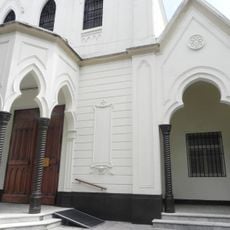
The main entrance is on the corner of Avenida Hipólito Yrigoyen and Quintino Bocayuva. Two staircases flanking the main altar lead from the middle church up to the upper temple and the camarín of the Virgin; the crypt with its 16 altars lies below. Mass is held daily, and confession is available.
The Carlo Vegezzi Bossi organ dates from 1910, not 1911: the instrument was built in Italy that year and inaugurated in 1911 by virtuoso Luis Ochoa, with composer Pietro Mascagni present. It is counted among the most distinguished organs in Buenos Aires.
The community of curious travelers
AroundUs brings together thousands of curated places, local tips, and hidden gems, enriched daily by 92,744 contributors worldwide.