Sítio Arqueológico de São Nicolau, Archaeological site in São Nicolau, Brazil.
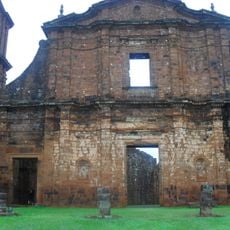
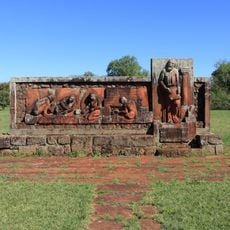
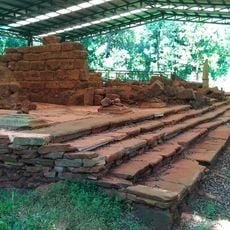
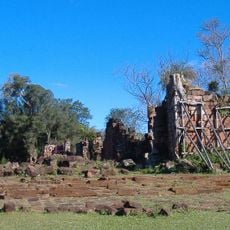
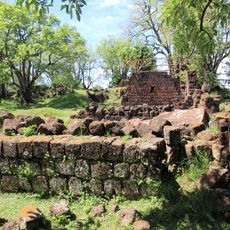
The archaeological site of São Nicolau is a former Jesuit settlement from the 1600s with stone walls, column bases, and underground drainage channels still visible today. The preserved structures reveal the layout of buildings and spaces where residents once lived and gathered.
São Nicolau do Piratini was founded on 3 May 1626 by the Jesuits Miguel de Ampuero and Roque González, and after attacks by bandeirantes the reduction was moved to Apósteles in 1638. It was refounded on 2 February 1687 near the original site, with 3,000 inhabitants in its first year and 6,070 baptised by 1710. The ruins visible today date from this second settlement, which declined after the Guaranitic War (1754–1756).
The site reflects how Jesuit builders and Guarani workers created structures together, visible in the stone foundations and wall patterns that remain. Walking through shows how these two groups shaped the settlement's physical form.
Access is on foot through local pathways, with ruins partly exposed and partly overgrown with vegetation. Bring weather-appropriate clothing and insect repellent, as the grounds are damp and surrounded by forest.
When Auguste de Saint-Hilaire passed through in 1820–1821, he found the church standing but the settlement ruined: the April 1819 raid by gauchos had driven residents away and conscripted the young, leaving barely two dozen inhabited houses. He counted 25 elderly Guarani living with their wives, a Guarani schoolmaster teaching a dozen children, and a Portuguese healer using local plants.
The community of curious travelers
AroundUs brings together thousands of curated places, local tips, and hidden gems, enriched daily by 94,459 contributors worldwide.