Cerro Rico, Mountain peak in Potosí region, Bolivia
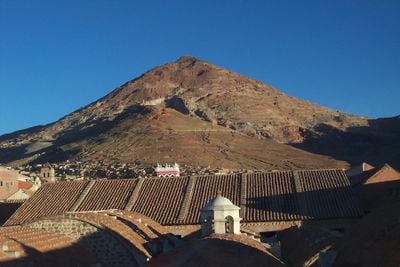
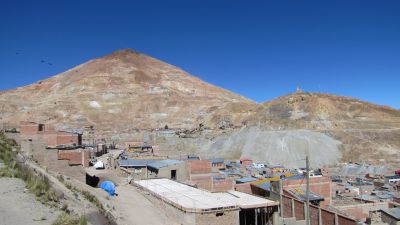
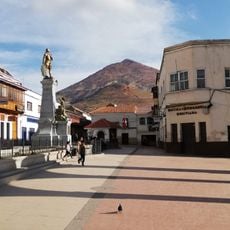
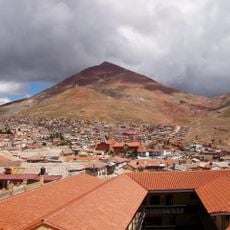
Cerro Rico is a mountain rising about 4,800 metres above sea level beside Potosí, Bolivia. Its barren, reddish-brown and tan flanks end in a rounded summit crossed near the top by a band of pale rock, with faint terrace-like lines on the mid-slopes. The peak stands directly above the town's low buildings and tiled roofs.
Silver extraction at Cerro Rico began in 1545 under the Spanish Empire, and from the 16th to the 18th century about 80% of the world's silver came from these mines. The Spanish used the mita, a forced labor system reintroduced by Viceroy Francisco de Toledo in 1574. After high-grade ores ran out by 1565, the patio process using mercury made low-grade paco ores profitable. Mining shaped Potosí into one of the largest cities in the New World.
The name means Rich Mountain in Spanish and refers to the enormous mineral wealth extracted here for centuries. Miners often enter the tunnels with offerings for El Tío, a figure from local belief whom they honor as a protective spirit of the underworld.
Tours into the mines require sturdy footwear, warm clothing and a headlamp, as the tunnels are dark and damp. The altitude can cause breathing difficulties, so spending a few days in Potosí beforehand to acclimatize is advisable.
In some tunnels miners work under conditions that have changed little since the 16th century, still using hand tools and dynamite. You can observe these active work areas during guided tours, offering a direct look at the daily life of the miners.
The community of curious travelers
AroundUs brings together thousands of curated places, local tips, and hidden gems, enriched daily by 92,745 contributors worldwide.