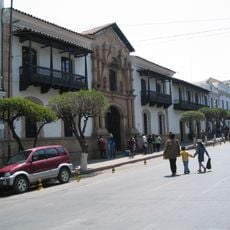
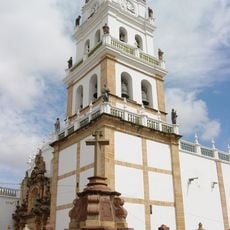
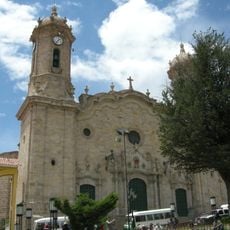
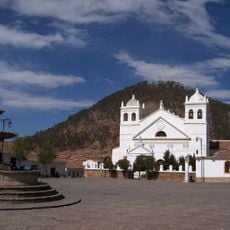
Basílica de San Francisco, Sucre, Bolivia, Colonial church in Plaza San Francisco, Sucre, Bolivia
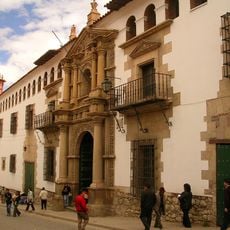
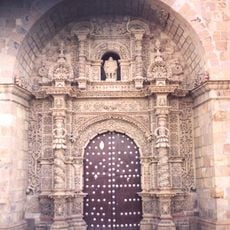
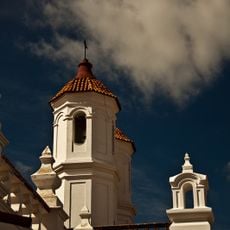
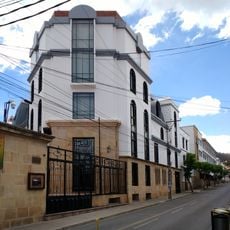
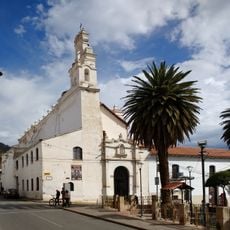
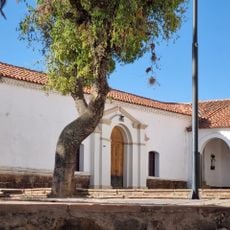
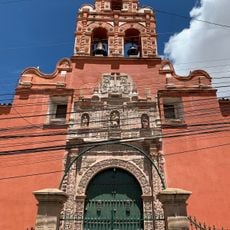
The Basílica de San Francisco is a whitewashed colonial church with a central nave and one side aisle, its two towers of unequal height making it visibly asymmetrical inside and out. The 18th-century retables are gilded and densely ornamented, while the wooden gabled ceiling is painted in intense colours and gold. On the Arce street side, images stand in niches set into the wall.
Franciscans received the land in 1539 from Pedro Hinojosa, and the central nave was finished in 1580, when the founders' remains were moved there; the church was consecrated the following year. On 25 May 1809 the Lemoine brothers rang the tower bell to launch the Chuquisaca uprising, the first of the 19th-century Latin American revolutions. In 1825 Antonio José de Sucre expropriated the complex for the municipality and the War Ministry, and it served as an arms depot until reopening for worship in 1868.
The church is named for Francis of Assisi, the Franciscan order that built it from 1539. The 18th-century altarpieces are gilded in gold leaf and densely carved in baroque style, while the wooden gable ceiling is painted in intense colours and gold. On the Arce street side, images stand in niches set into the wall; on the convent side the altarpieces sit directly against the nave.
The church is centrally located in the city and open daily for visitors, with guided tours available to explore the catacombs and bell tower. Wear comfortable shoes and allow time to see the different areas at your own pace.
The bell rung on 25 May 1809 was later named the Campana de la Libertad and hangs in the main tower; the Lemoine brothers, Juan Manuel and Joaquín, rang it to call the people against the Spanish authorities. The church was used as a stable and arms depot after 1825.
The community of curious travelers
AroundUs brings together thousands of curated places, local tips, and hidden gems, enriched daily by 92,892 contributors worldwide.