House at Sítio do Mandu, Bandeirista house in Cotia, Brazil
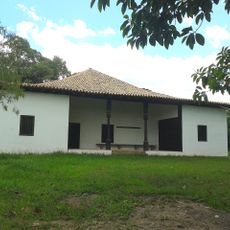
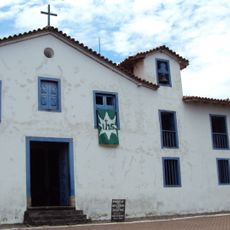
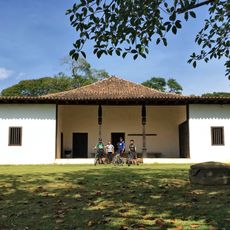
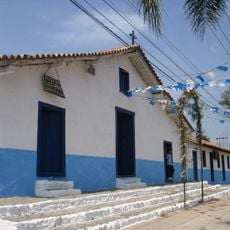
The House at Sítio do Mandu is a single-storey rural house with a rectangular plan and recessed porches on the front and rear elevations. Its self-supporting walls are built of taipa de pilão and pau-a-pique, with few openings framed by wooden lintels and sills, and windows fitted with grilles. The four-sided wooden roof rests on the earthen walls, its slope steeper at the centre and gentler toward the eaves, forming a curve; the space between roof and ceiling was used as a loft.
The house dates probably from the 17th century, not the 1700s. It was listed by IPHAN in 1961 and by CONDEPHAAT in 1974. Architect Eduardo Kneese de Mello found it on land his father Horácio de Melo bought in 1946; Luis Saia, Vilanova Artigas and Mário de Andrade visited with him. Restoration began in 1962 with structural reinforcement of the walls and replacement of wooden window and roof parts, followed by work in the 1980s, 1990s and from 2002, and maintenance by IPHAN in 2014.
The house is a characteristic example of a bandeirista house, a type studied by architect Luis Saia in articles for Revista Acrópole, later collected in the 1972 book Morada Paulista. Saia examined twelve similar houses in São Paulo, Sorocaba, Itaparica da Serra, Cotia and São Roque, and his analysis shaped the mid-20th-century interpretation of the bandeirante's role in paulista culture.
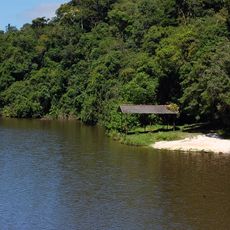
The house stands on a rural property in Cotia, at a mid-height point of the landscape, and is reached by road; the site was bought by Horácio de Melo in 1946. The building is a single-storey rectangle with recessed porches at the front and rear, and the central hall has no windows or skylights, so the alcoves stay dark. Look for the four-sided roof, steeper at the centre and gentler toward the eaves, and the wooden lintels and sills over the few openings.
The rear area contains evidence of wooden flooring, a rare feature in colonial residences that hints at the family's relative prosperity. This constructive detail sets it apart from most other surviving structures of that era.
The community of curious travelers
AroundUs brings together thousands of curated places, local tips, and hidden gems, enriched daily by 92,858 contributors worldwide.