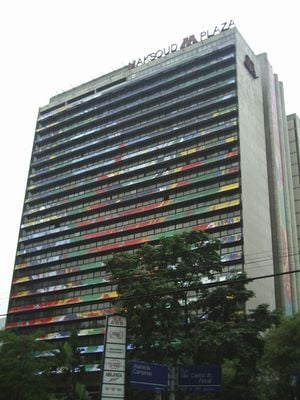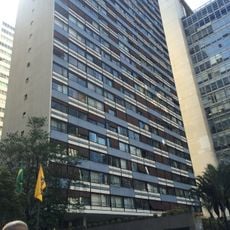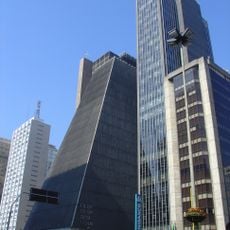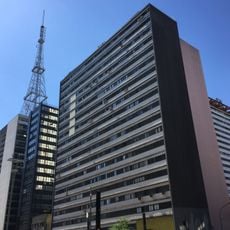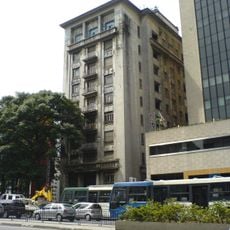
Maksoud Plaza, Architectural structure on São Carlos do Pinhal Street, São Paulo, Brazil
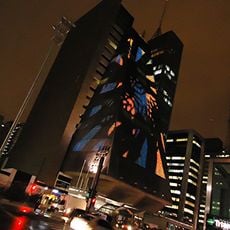
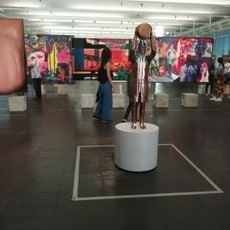
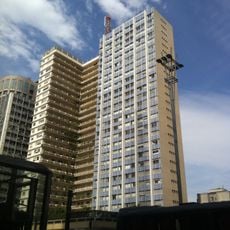
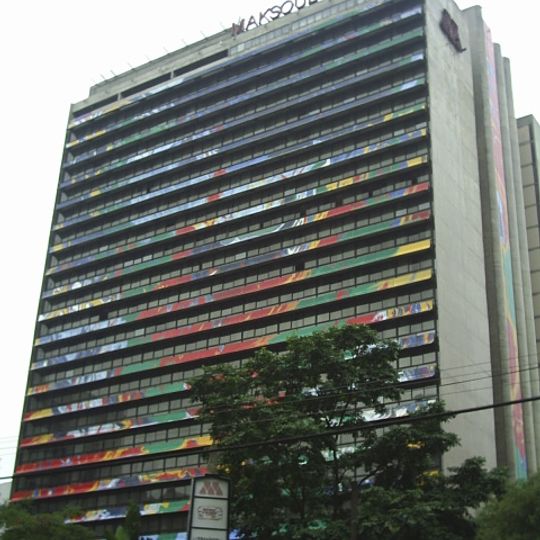
Maksoud Plaza is a 23-storey hotel building at Rua São Carlos do Pinhal 424, one block from Avenida Paulista, with 416 apartments on a 8,700 m² plot and 45,000 m² of built area, designed by Paulo Lucio de Brito. Its atrium held a suspended garden, a water-mirror fountain and natural light. In 2009 the facade received coloured abstract panels, which Henry Maksoud called the "Pollock effect".
The Maksoud Plaza rose on Rua São Carlos do Pinhal where the Abadia de Santa Maria, the first Benedictine women's monastery in the Americas, stood until the mid-1970s, when the nuns moved to Mandaqui. A group of bankers bought the land; two thirds went to Construtora Indi and one third to Henry Maksoud's Hidroservice. The monastery building was demolished and the 23-storey hotel opened in 1979 with 416 apartments after 18 months of construction and a 40 million dollar investment.
The 150 Night Club in this building hosted performances by musicians from around the world, drawing crowds who came to experience live jazz and contemporary music. The venue served as a gathering place where artists and audiences connected over shared musical interests.
The hotel stands at Rua São Carlos do Pinhal 424, one block from Avenida Paulista, on a 8,700 m² plot with 45,000 m² of built area. Its 23 floors held 416 apartments, and the atrium had a suspended garden, a water-mirror fountain and natural light. The PanAm bar opened in 2014 beneath the helipad. The hotel closed on 7 December 2021.
The nuns of the Santa Maria Abbey, displaced from this site, supplied the hotel with handmade chocolate bonbons filled with orange zest from fruit they grew themselves. The sweets were offered to guests, keeping a link between the hotel and the Benedictine community that once occupied the land.
The community of curious travelers
AroundUs brings together thousands of curated places, local tips, and hidden gems, enriched daily by 94,351 contributors worldwide.