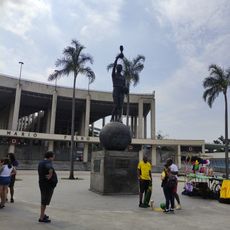
Maracanã Stadium, Football stadium in Maracanã District, Brazil.
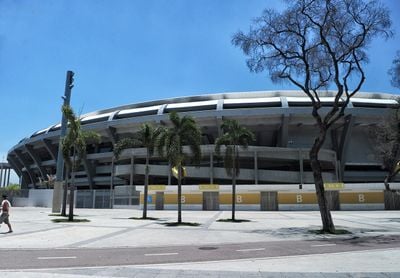
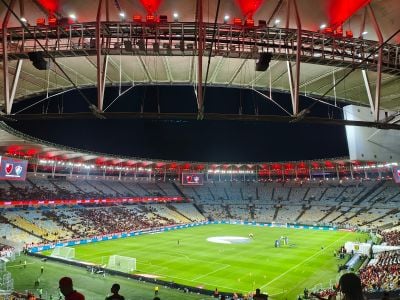
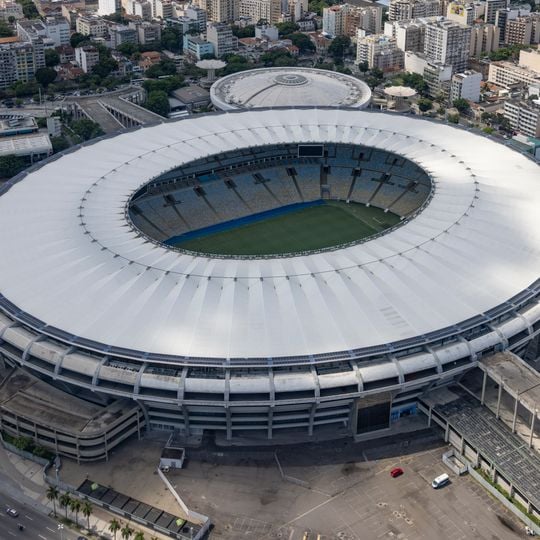
The Maracanã Stadium is a football arena in the Maracanã district of Rio de Janeiro, made up of multiple concrete tiers ringed by a cantilevered roof. The central pitch measures roughly 110 by 75 meters and is surrounded by seating arranged along a perimeter of around 800 meters.
The stadium was built for the 1950 football World Cup and hosted the final between Brazil and Uruguay in front of more than 170,000 spectators. Over the following decades the facility was renovated and adapted to meet modern standards.
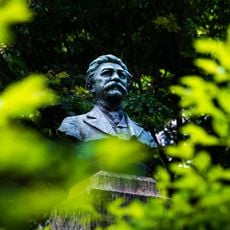
The name Maracanã comes from a Tupi word for a parrot that lived in the area, and locals still use it rather than the official Estádio Jornalista Mário Filho, adopted in 1964 for journalist Mário Filho. The Fla-Flu derby between Flamengo and Fluminense drew 194,603 spectators on 15 December 1963, a club record. In 1983 a Brazil–USSR volleyball match here drew 95,887 paying spectators.
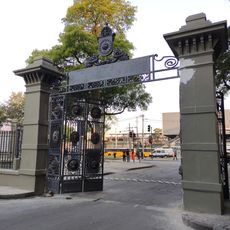
The stadium sits on Avenida Presidente Castelo Branco, with Gate 2 (Portão 2) serving as the address given for the venue. The Maracanã metro station on Line 2 is the nearest stop. Arrive well before kickoff on match days, as the surrounding streets and entrances fill quickly.
The cantilevered concrete roof extends roughly 30 meters (about 100 feet) over the stands toward the pitch, allowing natural sunlight to reach the grass while sheltering spectators from rain and sun. This design shapes the appearance of the arena and helps the grass grow.
The community of curious travelers
AroundUs brings together thousands of curated places, local tips, and hidden gems, enriched daily by 94,088 contributors worldwide.