Rio–Niterói Bridge, Road bridge in Rio de Janeiro, Brazil
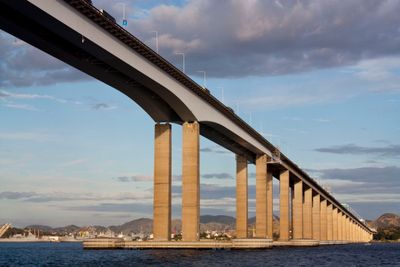
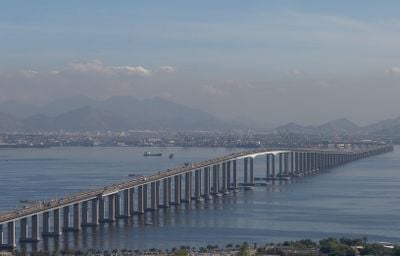
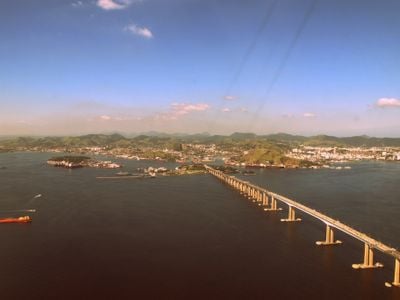
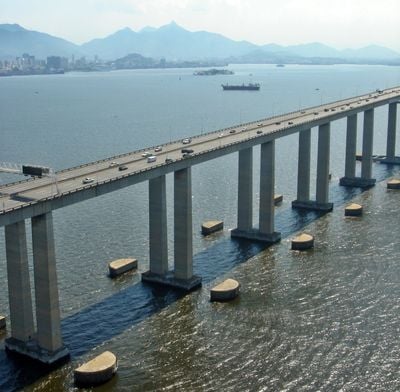
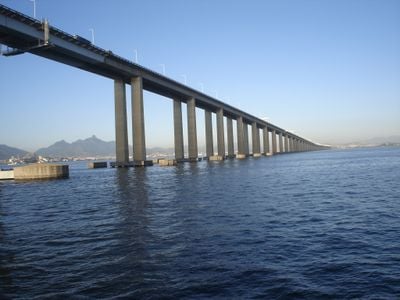
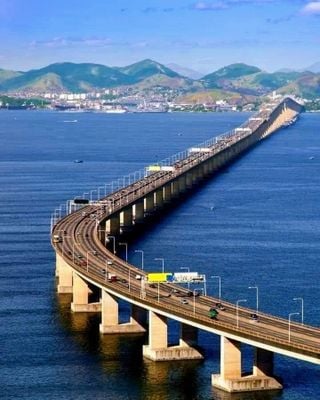
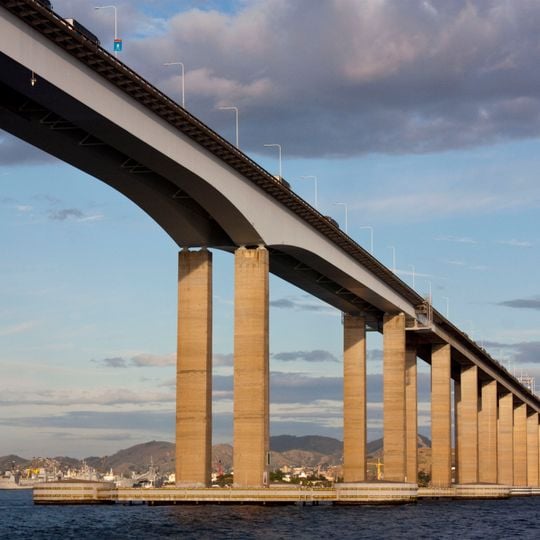
The Rio-Niterói Bridge is a box girder road bridge crossing Guanabara Bay, 13.29 km long with 8.8 km over water. Its 300-metre central span rises 72 metres above the water to let ships pass. The deck runs on tall concrete piers standing in pairs in the bay, and the structure is officially part of federal highway BR-101.
Construction began in January 1969 using modular components manufactured in England and shipped to Brazil. The project was completed after several years of intensive work, transforming the connection between Rio de Janeiro and Niterói.
The official name, President Costa e Silva Bridge, honors Artur da Costa e Silva, the military-dictatorship president who signed the construction decree in 1968. The nickname Rio-Niterói took over so completely that, as the English Wikipedia notes, hardly anyone uses the official name today. A 2012 bill to rename it after Herbert de Souza drew objections from the military.
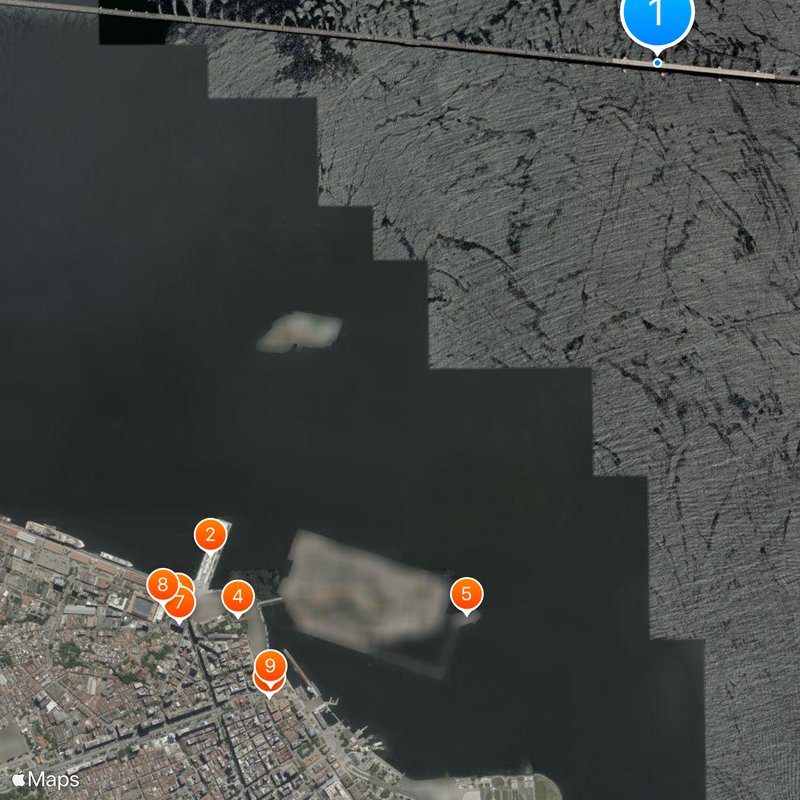
The bridge carries federal highway BR-101 between Ponta do Caju in Rio de Janeiro and Avenida do Contorno in Niterói. It is a toll crossing managed since 2015 by the concessionaire Ecoponte under a 30-year contract. Traffic is heaviest during Carnival and at morning and evening commute times.
The 300-metre central span was the world's longest box girder when the bridge opened in 1974, later surpassed by Norway's Stolma Bridge (1998) and China's second Shibanpo Bridge (2006). Officially 33 workers died during construction; unofficial estimates exceed 400.
The community of curious travelers
AroundUs brings together thousands of curated places, local tips, and hidden gems, enriched daily by 92,280 contributors worldwide.