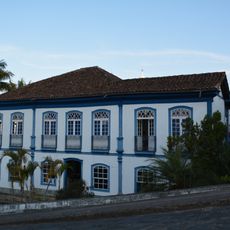
Church of Saint Francis of Assisi, Colonial religious landmark in Diamantina, Brazil.
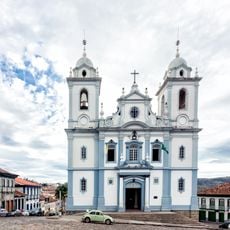
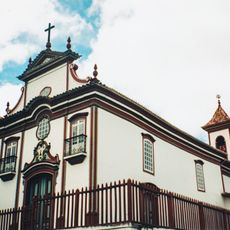
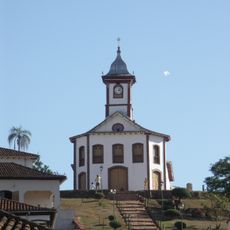
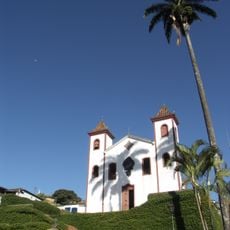
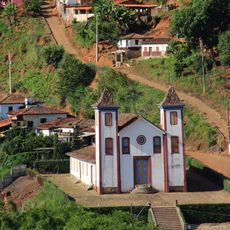
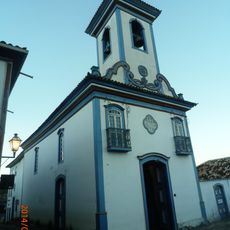
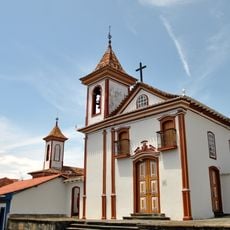
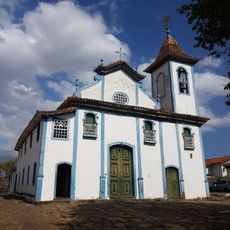
The Church of Saint Francis of Assisi stands at the corner of São Francisco and Macau de Cima streets, raised on a platform above street level and reached by a monumental stone staircase. Its main facade has a curved-volute pediment and a single lateral tower, painted in blue, red and yellow. The T-shaped plan holds a nave, chancel flanked by sacristy and consistory, and choir, with stepped floor levels rising toward the altar.
The Venerable Third Order of Saint Francis of Assisi was established in the village of Tijuco in 1762, and construction of the church began in 1766, funded by donations from brothers and devotees. The works were considered finished at the end of 1830. IPHAN listed the church in 1949, and it still serves Catholic worship.
The interior gilding and illusionistic ceiling painting of the chapel are attributed to José Soares de Araújo. The pulpit, chancel arch and main altarpiece carry this gilded ornament, while the whitewashed exterior keeps blue, red and yellow trim. The Third Order of Saint Francis of Assisi, established in Tijuco in 1762, funded the work through donations from brothers and devotees.
The church stands at the corner of Rua São Francisco and Rua Macau de Cima, near Praça Juscelino Kubitschek, on a raised platform reached by a monumental stone staircase. The interior floor rises in steps from the nave to the high altar, so expect uneven levels underfoot. It remains an active Catholic church, so visits may be limited during services.
The structure merges northern Portuguese baroque traditions with local building techniques using wood and clay materials. This combination demonstrates how European and Brazilian methods came together during the colonial period, creating something distinct.
The community of curious travelers
AroundUs brings together thousands of curated places, local tips, and hidden gems, enriched daily by 92,807 contributors worldwide.