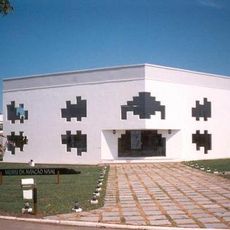
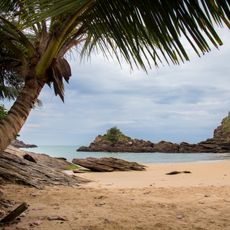
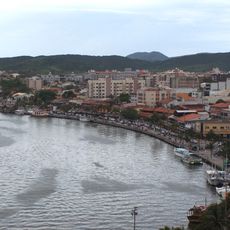
Igreja Matriz de São Pedro, Colonial church in São Pedro da Aldeia, Brazil
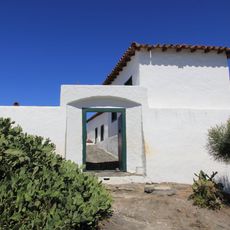
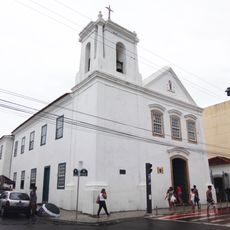
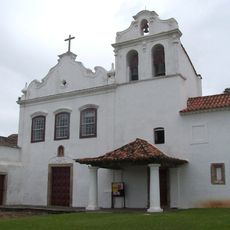
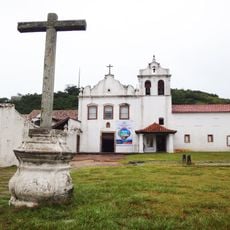
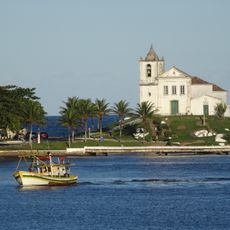
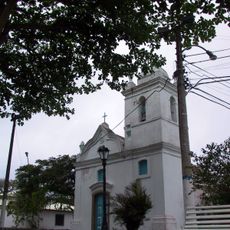
Igreja Matriz de São Pedro has a rectangular plan with 70 cm thick outer walls of stone masonry, lime and whale oil. Its facade holds a bell tower, a straight-lintel door and a rectangular window above it; the roof has two slopes with small volutes. Inside, square masonry pillars support the roof timbers, and two sacristies flank the chancel.
Construction of this church began in the 17th century and continued for over 150 years under Jesuit direction before reaching its final form. The extended building period reflects the difficult conditions and limited resources available to this colonial settlement.
The church is popularly called Igreja dos Jesuítas, yet it was built by the Indigenous people of the aldeamento, brought from Anchieta in Espírito Santo. The complex also includes the old convent, now the parish hall, and the parish cemetery, all listed by IPHAN in 1938.
The church, the former convent (now the parish hall) and the parish cemetery stand together in the town centre and are visited on foot. The building is an active parish church, so visits fit around Masses and parish events; the 1938 IPHAN listing covers all three parts of the complex.
The church is commonly called Igreja dos Jesuítas, yet the sources state it was built by the Indigenous people of the aldeamento, not the Jesuits. Those builders were brought from Anchieta, the old village of Reritiba in Espírito Santo, and began work in 1620.
The community of curious travelers
AroundUs brings together thousands of curated places, local tips, and hidden gems, enriched daily by 94,041 contributors worldwide.