Juma Sustainable Development Reserve, Sustainable development reserve in Novo Aripuanã, Brazil.
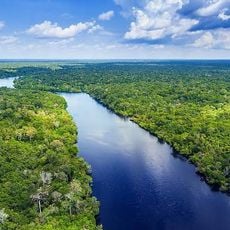
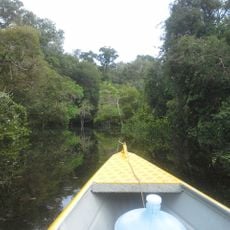
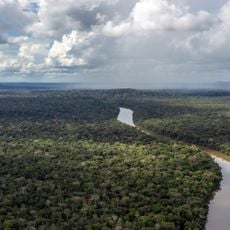
The Juma Sustainable Development Reserve covers 589,611 hectares in the municipality of Novo Aripuanã, Amazonas. The Mariepauá River marks its western boundary and the Acari River its eastern one, while the Aripuanã River drains the reserve with clear water. Its rainforest ranges from dense lowland and submontane forest to várzea and igapó floodplain, with about 242 plant species recorded.
The reserve was created by state decree 26.010 on 3 July 2006, with its deliberative council formed on 17 July 2009 and management plan published in March 2010. In 2008 the Juma REDD project began, implemented by the Fundação Amazonas Sustentável with Marriott International funding, the first such project under the state climate change policy. A 2007 ordinance recognised 157 small-farmer families in the reserve.
About 11 communities live in the reserve, recognised in a 12 November 2007 ordinance as 157 families of small farmers. They farm, log, mine gold and extract copaiba oil. Archaeological sites hold ceramics and axes from farming practised 1,500 to 2,000 years ago.
Visitors can explore the forest between two river systems where they can observe hundreds of plant species and multiple primate species in their habitat. It is helpful to check local access conditions before arriving since water levels and seasonal changes affect how the area can be visited.
This reserve was the first of its kind in Brazil to be funded through an international program focused on preventing emissions from forest loss and degradation. This pioneering approach demonstrated how forest protection could work through creative financing rather than traditional conservation methods.
The community of curious travelers
AroundUs brings together thousands of curated places, local tips, and hidden gems, enriched daily by 93,787 contributors worldwide.