Caatinga, WWF ecoregion in northeastern Brazil
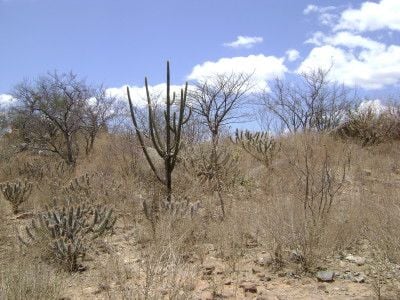
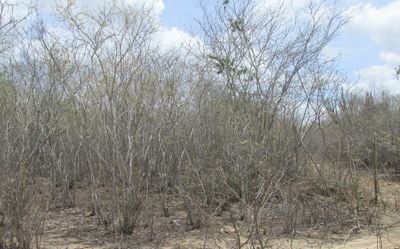
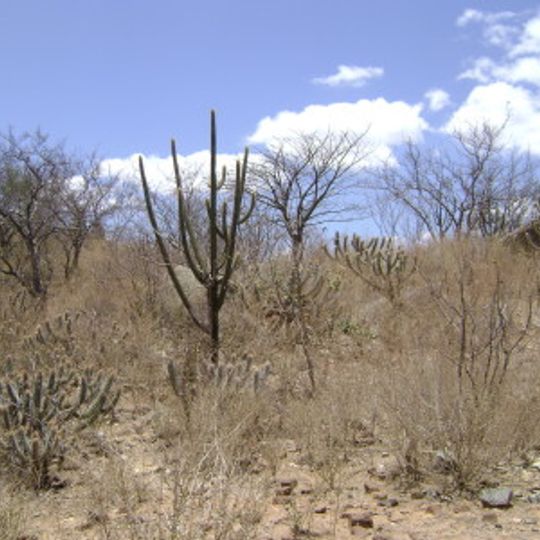
Caatinga is an ecoregion in northeastern Brazil where thorn trees, cacti, and shrubs grow across dry plains and low hills. The plants shed leaves during drought, turning the landscape gray until rains return.
Human groups have lived here for thousands of years, leaving stone tools and rock art in caves. Adapting to the dry climate shaped how these early inhabitants survived over time.
The name Caatinga derives from Old Tupi ka'atinga, meaning white forest, after the pale, leafless look of the vegetation in the dry season. Two major indigenous groups, the Macro-Jê and the Kariris, lived here for at least two thousand years before the Tupis arrived after the 11th century.
The region is best visited during the rainy season when plants turn green and the landscape changes. Water and sun protection are essential during dry months, as shade is scarce.
Many plants here grow only in this dry zone and nowhere else on Earth. Some cactus species store water in thick stems and bloom after the first rains.
The community of curious travelers
AroundUs brings together thousands of curated places, local tips, and hidden gems, enriched daily by 92,195 contributors worldwide.