Floresta Nacional do Araripe-Apodi, National forest in Ceará, Brazil
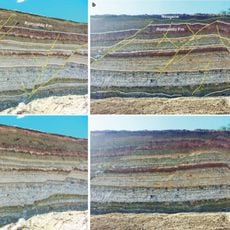
Floresta Nacional do Araripe-Apodi is a 38,968-hectare national forest on the Araripe plateau, crossing the Ceará–Pernambuco border through Barbalha, Crato, Jardim and Santana do Cariri. Its tabular relief lies between 840 and 920 metres, with cerradão woodland and transition bands of Atlantic forest, cerrado and caatinga. Cretaceous latosols hold fossils, including the dinosaur Santanaraptor placidus.
Created by federal decree 9.226 of 2 May 1946, it was the first national forest established in Brazil, set up to protect one of the Northeast's most environmentally diverse forests. A 2012 decree renewed its legal status over 38,968 hectares on the Araripe plateau, managed by ICMBio within the national conservation system.
The forest's name comes from the Araripe plateau and the Apodi stream; locals know it as FLONA Araripe. The soldadinho-do-araripe, a bird found only in this region, is the emblem people associate with the forest. Under ICMBio management the area is open for environmental education, scientific research and leisure, so school and university groups are a common sight on its trails.
The forest sits on an elevated plateau, so visitors should plan to use organized tours or their own transportation to explore the area effectively. Visiting during or just after the rainy season offers better conditions for walking and observing water sources.
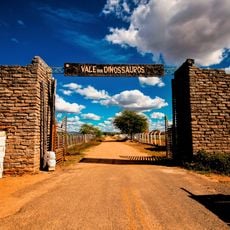
The forest holds a Cretaceous-era fossil site where species found nowhere else, such as the dinosaur Santanaraptor placidus, were unearthed. Its bird list counts 88 species in 34 genera, among them the Araripe manakin (Soldadinho-do-araripe), recorded only in this region.
The community of curious travelers
AroundUs brings together thousands of curated places, local tips, and hidden gems, enriched daily by 92,885 contributors worldwide.