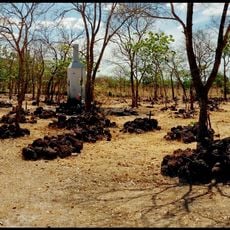
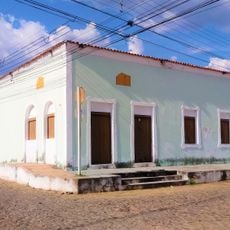
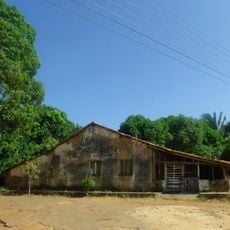
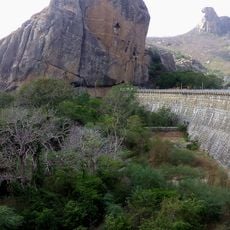
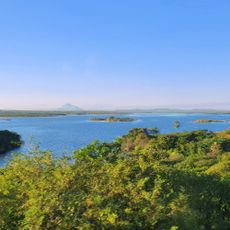
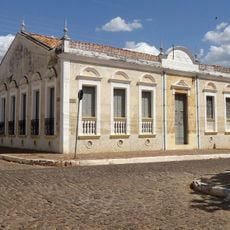
Serra das Almas Private Natural Heritage Reserve, Private Natural Heritage Reserve in Crateús, Brazil.
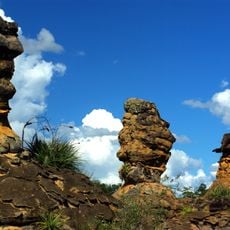
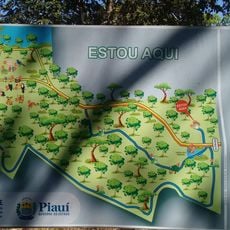
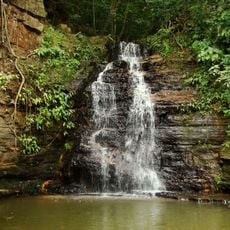
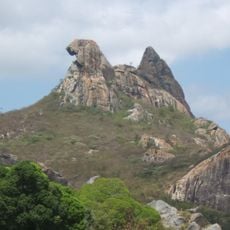
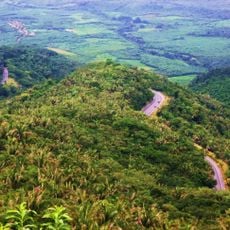
Serra das Almas is a private natural heritage reserve of 6,285 hectares, of which 5,845 hectares form the RPPN, spanning Crateús in Ceará and Buriti dos Montes in Piauí. Its terrain rises about 400 metres from the Sertaneja depression to the Ibiapaba plateau, with escarpments, four springs and six trails. The upper base, the Professora Maria Angélica Figueiredo Environmental Interpretation Centre, sleeps 36; the lower Samuel Johnson Ecological Centre has a 16-bed lodge, laboratory, observation tower and native seedling nursery.
The reserve traces its origins to Herbert Fisk Johnson Jr.'s 1935 expedition studying carnauba palms, which led to its official protection status in 2000. Decades of scientific interest in the region's botanical resources shaped the path toward formal conservation.
The Samuel Johnson Ecological Center, in the lowland Sertão de Crateús, has a seed nursery for native species and a meliponary for stingless bees, plus a lookout tower, laboratory and auditorium. It hosts courses and lectures on sustainable technologies, and the whole complex runs on solar power. The reserve's name comes from the Serra das Almas, the ridge where its upper trails climb to about 740 m.
Visitors need to schedule their trips at least four days in advance to secure access to the trails and facilities. Planning ahead ensures smooth coordination and confirms the availability of lodging and guided services.
The reserve grew out of a 1935 trip by Herbert Fisk Johnson Jr., who flew a twin-engine Sikorsky S-38 amphibian from Milwaukee to Fortaleza to study the carnauba palm, source of the wax his company used. A processing factory followed in Fortaleza in 1937 and a research farm in 1938.
The community of curious travelers
AroundUs brings together thousands of curated places, local tips, and hidden gems, enriched daily by 92,873 contributors worldwide.