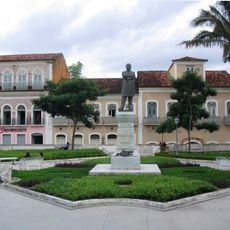
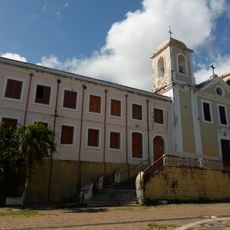
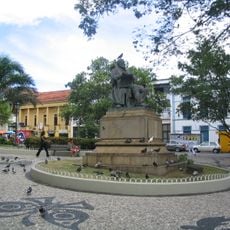
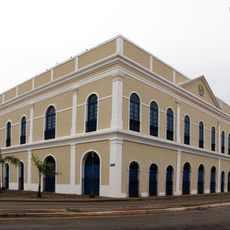
Palace of the Lions, Official residence in São Luís, Brazil
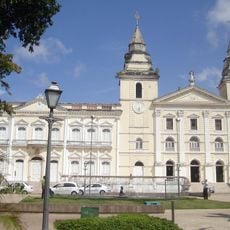
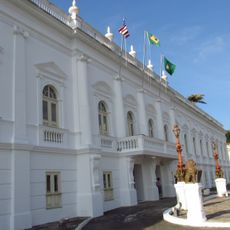
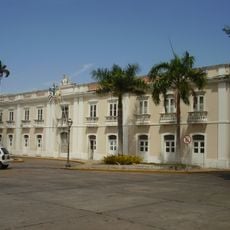
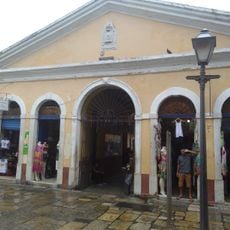
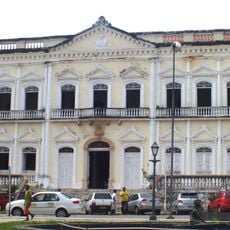
The Palácio dos Leões is the official seat of government for the state of Maranhão in the historic center of São Luís, serving both as an administrative building and a ceremonial reception venue. The multi-story limestone structure displays classic colonial architecture with tall windows, wrought-iron balconies, and a yellow-and-white facade facing out toward the Praia Grande.
The site began on 8 September 1612, when the French under Daniel de La Touche built Fort São Luís on the island of Upaon-Açu. After their expulsion in 1615, Jerônimo de Albuquerque had a governors' residence built inside the fort in rammed earth with indigenous labour, designed by Francisco Frias de Mesquita. Rebuilt in stone and lime from 1624, it served as home and administrative office until 1762, when Joaquim de Melo e Póvoas had it demolished and replaced by a new stone-and-lime palace.
The name comes from a 1920s newspaper campaign: under governor Magalhães de Almeida (1926–1929), the opposition paper O Combate likened the lions on the facade to a government devouring taxes, and the nickname stuck. The palace remains the seat of Maranhão's government and a venue for official ceremonies.
The palace stands on the promontory above the Anil and Bacanga estuaries, at the edge of the historic centre listed by UNESCO. The entrance is on the main facade, reached from the surrounding square; the residential wing lies in the rear extension built in 1906. Visits are to the state government's official rooms, so access depends on the building's administrative use.
The palace's name comes from a 1920s newspaper campaign: "O Combate" compared the bronze lions at the entrance to the government's appetite for taxes, and the nickname stuck. The lions themselves are heraldic sculptures flanking the entry, not French-cast guardians from the 19th century.
The community of curious travelers
AroundUs brings together thousands of curated places, local tips, and hidden gems, enriched daily by 92,854 contributors worldwide.