Episcopal Palace, Episcopal palace in São Luís, Brazil.
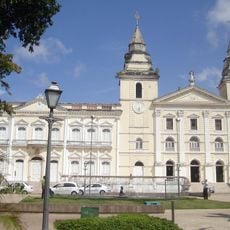
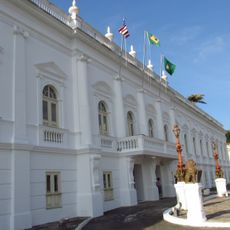
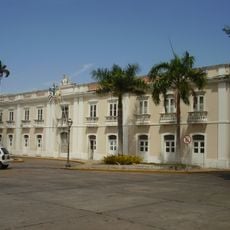
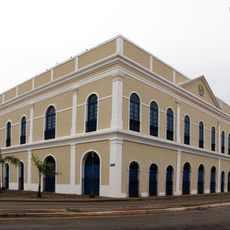
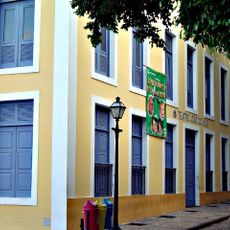
The Episcopal Palace stands on Praça Pedro II beside the Cathedral of Nossa Senhora da Vitória in São Luís. Its neoclassical facade, gained in mid-19th-century renovations, centres on a lioz stone portal carved with the diocese coat of arms. The building began as the Jesuit College of Nossa Senhora da Luz, founded in 1627.
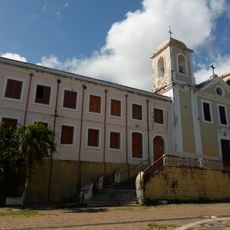
The site was first occupied from 1627 by the Colégio de Nossa Senhora da Luz, a Jesuit college and church expanded during the 17th century under priests António Vieira and João Felipe Bettendorf. After the Jesuits were expelled from colonial Brazil in 1759, the church became the cathedral and the college was turned into the bishops' palace. Ruined by the mid-19th century, it was rebuilt in the neoclassical form seen today, and since 1922 has housed the archbishops' offices.
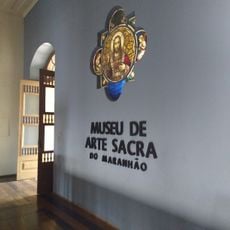
The palace's name recalls its Jesuit origin: the site held the Colégio de Nossa Senhora da Luz from 1627, and after the Jesuits were expelled in 1759 the college became the bishops' residence. Since 2014 the upper floor houses the Museum of Sacred Art, whose collection of religious and Jesuit objects presents the colonisation of Maranhão from the 17th century.
The building stands on Praça Pedro II, beside the Cathedral of Nossa Senhora da Vitória, in the historic centre listed by UNESCO. Since 2014 the upper floor houses the Museum of Sacred Art, whose collection covers the colonisation of Maranhão from the 17th century and includes Jesuit sacred art. Look for the lioz stone portal with the diocese coat of arms at the centre of the facade.
The stone portal in the centre of the facade is made of lioz limestone from Portugal and carries the coat of arms of the diocese. The building became the archbishops' office in 1922, when the Archdiocese of São Luís was created.
The community of curious travelers
AroundUs brings together thousands of curated places, local tips, and hidden gems, enriched daily by 93,314 contributors worldwide.