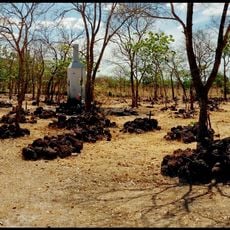
Floresta Fóssil de Teresina, Paleontological site near Poti River, Teresina, Brazil.
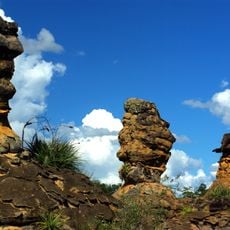
Floresta Fóssil de Teresina is a paleontological site along the Poti River where tree trunks and plant remains from prehistoric times are embedded in rock formations. The fossils lie in their original positions, allowing visitors to see the arrangement of ancient vegetation directly in the stone.
The fossil trunks were found in 1909 by geologist Miguel Arrojado Lisboa on the banks of the Poti River. Later studies identified trunks preserved upright in growth position and a species new to science, Teresinoxylon eusebioi. The site became a municipal park on 8 January 1993 and was listed by the Ministry of Culture on 25 October 2010.
The name Floresta Fóssil refers to the petrified trunks of Psaronius sp. and Teresinoxylon eusebioi, a species new to science found here. Guides, environmental conductors and educators accompany visiting groups when requested, and the park was turned into a municipal park on 8 January 1993.
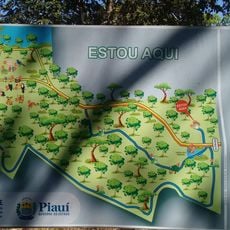
The site is open for organized visits on certain days, with groups able to examine the fossils under guidance from specialists. It is best to wear appropriate clothing and sturdy footwear since you will have direct contact with rocks and the riverbank.
The site is the only paleontological site inside a Brazilian state capital, and its fossil trunks stand upright in the exact spot where the plants grew, rather than having been moved or reassembled. The fern Psaronius sp., also found in Germany, helped date the Pedra de Fogo Formation to the Permian.
The community of curious travelers
AroundUs brings together thousands of curated places, local tips, and hidden gems, enriched daily by 93,010 contributors worldwide.