Quixadá Monoliths Natural Monument, Natural monument in Quixadá, Brazil.
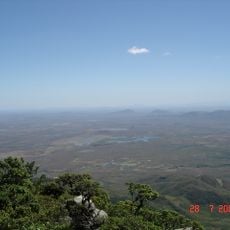
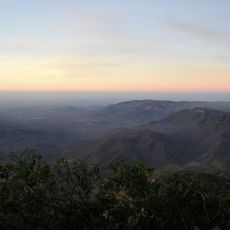
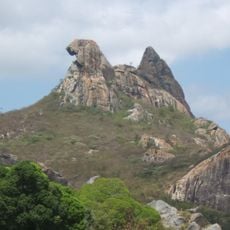
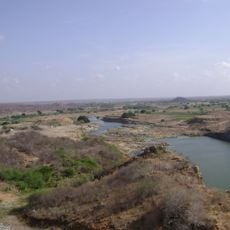
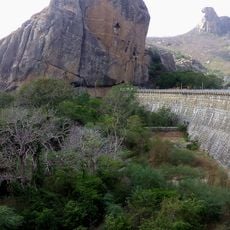
The Quixadá Monoliths Natural Monument is a 16,635-hectare fully protected conservation unit in the municipality of Quixadá, Ceará, holding inselbergs of the dry Caatinga biome. These residual rock formations remain after erosion in the semi-arid environment. The best known is the Pedra da Galinha Choca, a monolith at whose foot the stone-masonry Barragem do Cedro stands.
The monument was created by Ceará state decree 26,805 of 25 October 2002, covering 16,635 hectares of inselbergs in the Caatinga. In 2004 IPHAN listed the area as the Parque Nacional dos Serrotes de Quixadá, a landscape ensemble of monolithic rock formations. The Barragem do Cedro, built 1890–1906 of stone masonry, cement and steel at the foot of Pedra da Galinha Choca, entered the UNESCO tentative list on 30 January 2015.
The monument holds little-explored archaeological sites with cave paintings and other remains dating to prehistoric times. Because of these finds, part of the area also falls under the responsibility of IPHAN, Brazil's national heritage institute, alongside the state environmental agency Semace.
The monument covers 16,635 hectares of dry Caatinga in the municipality of Quixadá, about 160 km from Fortaleza, and is administered by Semace. Access is by road; the Pedra da Galinha Choca and the Barragem do Cedro at its foot are the usual landmarks to head for. Removing, marking or defacing the rock formations is prohibited, as are civil works and road works that would alter the inselberg fields.
The monument joined the World Famous Mountains Association in 2010, when the only other Brazilian member was the Araripe Geopark in Cariri. The Pedra da Galinha Choca, the best-known monolith, takes its name from its shape, which resembles a brooding hen.
The community of curious travelers
AroundUs brings together thousands of curated places, local tips, and hidden gems, enriched daily by 92,813 contributors worldwide.