Historical and Geographic museum of Campina Grande, Historical and geographic museum in Campina Grande, Brazil
The Historical and Geographic Museum of Campina Grande holds collections of photographs, documents, maps, furniture, tools, and personal objects that capture moments from the city's past. The displays are arranged to show different periods of the region's development and how people lived through them.
Construction began in 1812 and the building opened in 1814 as Campina Grande's first jail, 24 years after the town became Vila Nova da Rainha. For 60 years the ground floor held the jail while the upper floor housed the Casa da Câmara. In 1824 Frei Caneca, a leader of the Confederation of the Equator, was imprisoned here. The building has housed the museum since January 1983.
The building's name lives on in the phrase "Telegrapho Nacional", still stamped at the top after the telegraph station opened there on 13 January 1896, first called "Estação Telefônica". The collection gathers photographs, maps, furniture, weapons, vehicles, jewels, dolls and tools arranged to tell the city's story.
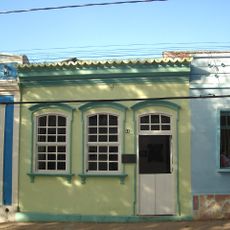
The museum occupies the 1814 building on Avenida Floriano Peixoto, with the ground floor that once held the jail and the upper floor that housed the Casa da Câmara. Look for the "Telegrapho Nacional" lettering still stamped at the top of the facade, a trace of the telegraph station inaugurated on 13 January 1896.
The jail housed Frei Caneca, a leader of the 1824 Confederation of the Equator, when prisoners from Ceará were brought to Vila Nova da Rainha. The building's role in that revolt is often overlooked by visitors.
The community of curious travelers
AroundUs brings together thousands of curated places, local tips, and hidden gems, enriched daily by 92,808 contributors worldwide.