Blombos Cave, Archaeological site on Southern Coast, South Africa.
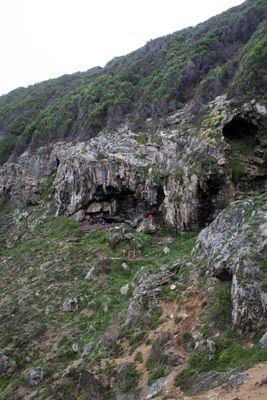
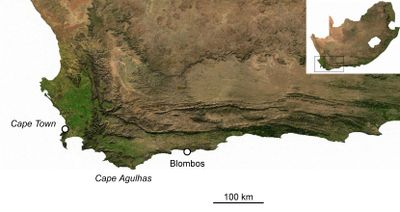
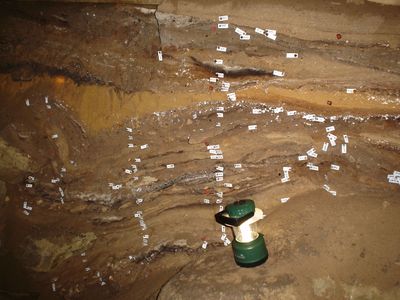
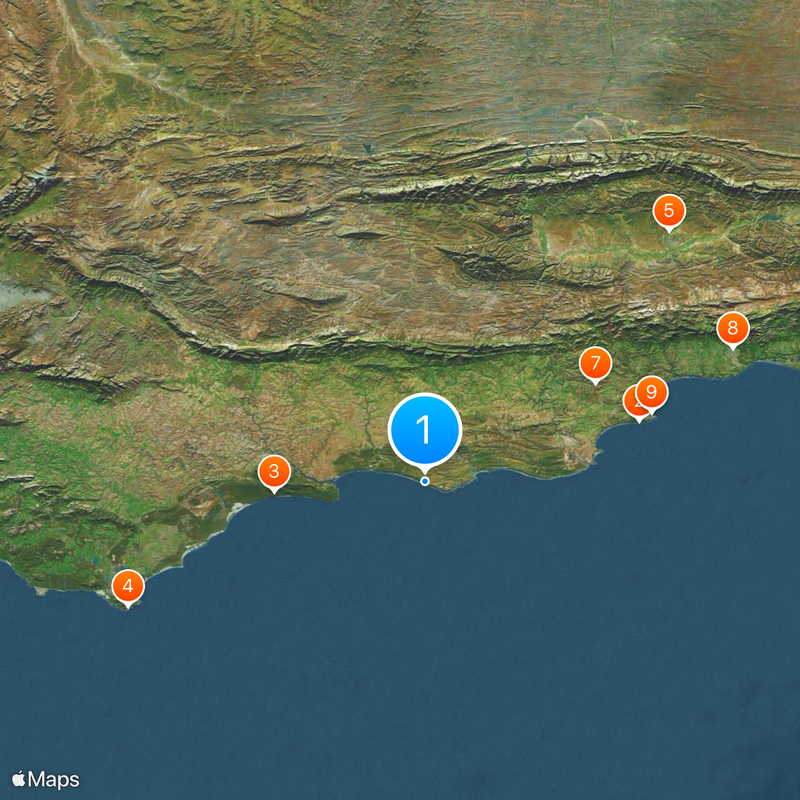
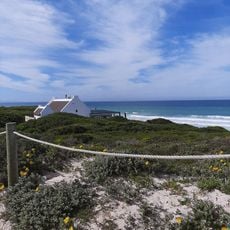
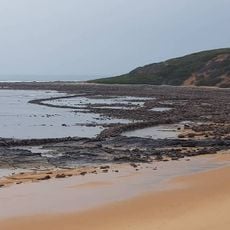
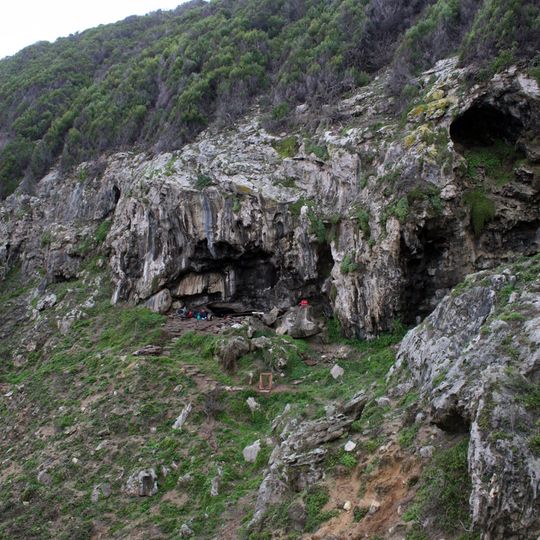
Blombos Cave is an archaeological site on the Southern Coast of South Africa, located about 300 kilometers east of Cape Town along the shoreline between Still Bay and Gansbaai. The cave opens in the limestone of a low slope facing the Indian Ocean and has been filled with sediment layers through millennia of human settlement.
People used the cave as shelter and workshop in several phases between 140,000 and 70,000 years ago. Excavations starting in 1991 brought to light worked ochre pieces with engraved patterns that point toward early symbolic expression.
The name comes from the Blombos plants that grow across the sandy slope above the ocean. Today the cave remains closed to visitors while researchers continue working inside, with only the outer rock formation visible.
Access to the cave is strictly limited to protect ongoing research, and visitors need special permission from the university. Guided visits are arranged only occasionally, usually for professionals or small groups with academic interest.
Shells of the species Haliotis were used here as containers for paint mixtures, filled with red and yellow pigments around 100,000 years ago. This discovery ranks among the oldest evidence of intentional production of complex materials by humans.
The community of curious travelers
AroundUs brings together thousands of curated places, local tips, and hidden gems, enriched daily by 91,526 contributors worldwide.