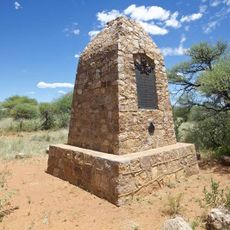
Phillipp's Cave, Cave and national monument in Erongo Region, Namibia
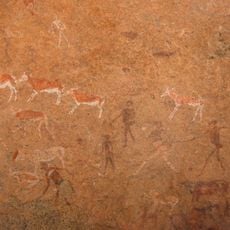
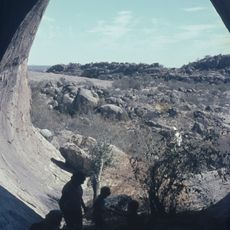
Phillipp's Cave is a rock shelter in Erongo Region measuring approximately 15 meters deep, 35 meters wide, and 7 meters high, with its granite walls covered in numerous rock paintings. The images span various subjects and demonstrate the artistic work of earlier inhabitants in this part of the region.
Archaeological excavations at this site uncovered stone tools dating to around 3500 BC, revealing centuries of human occupation in the area. These findings indicate that people returned to this shelter repeatedly across many generations.
The cave's best-known image is a white elephant, with a red antelope painted at its centre that researchers believe was added later; its date remains debated. Henri Breuil described the drawings in the second volume of his six-volume work on southern African rock art, and in 1957 published a radiocarbon date of 3368 BC ± 200 years for the prehistoric finds.
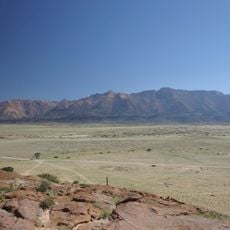
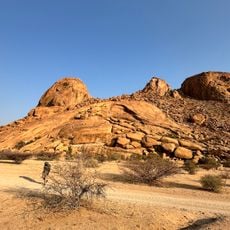
The marked route from the Ameib farmstead to the cave takes about 60 minutes; from the signposted car park it is a 30-minute walk. The final stretch calls for surefootedness, so wear sturdy shoes and carry water for the warm hours.
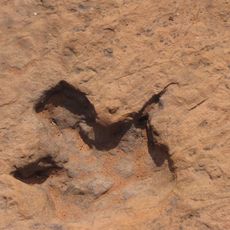
The rock walls preserve visible finger traces left by the original artists who applied the paint. These direct tactile marks offer a personal connection to the hands of those who created these artworks centuries ago.
The community of curious travelers
AroundUs brings together thousands of curated places, local tips, and hidden gems, enriched daily by 94,176 contributors worldwide.